-
Hiking Santa Ysabel Open Space Preserve

Ancient god face in wood Today my daughter and my hiking buddy Alex spent almost five hours hiking a seven-mile trail in the stunning Santa Ysabel Preserve. Alex and I hiked the Kanaka Loop trail before, taking less time, but today we stopped often for photographs of the abundant birds, insects, plants and incredible views.

A small pine in the shadow of a fallen giant Managed by the County of San Diego Parks Dept., this open space preserve has two entrances. The West Loop Trail, which is short and mostly easy, is off of Highway 79, and the main entrance and staging area is off of Farmer Road past Julian (http://www.sdcounty.ca.gov/parks/openspace/Santa_Ysabel.html ) . Each entrance offers loop trails, and are connected by a portion of the Coast to Crest Trail.
This preserve is the home of ancient oak riparian woodlands,

Out of a storybook 200-year-old sycamore groves,
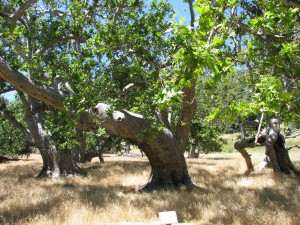
Two-hundred year-old sycamores stunning views of the mountains and hills west, with a glimpse of Palomar Observatory in the far distance

The View towards Palomar Observatory and equally serene pastoral landscapes of mountain homes, apple orchards and rolling hills in the southeast.
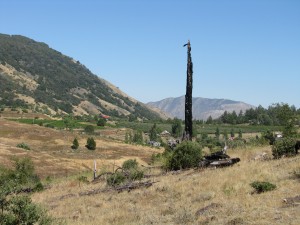
A beautiful valley of apple groves At this time of year the grasslands are pale gold, and ripples travel for acres in the very welcome warm breeze that kept this July day from being overwhelmingly hot.
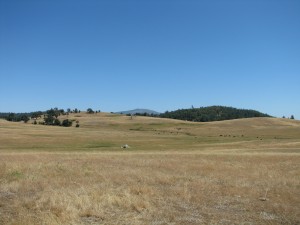
Rolling grasslands A new experience for us was to walk miles of trail while disturbing thousands of grasshoppers that flung themselves out of the way or took wing to avoid us. It was like setting popcorn off as we walked, trying to not tread on any but also being hit by some misdirected fellows. One took a ride on my pants for awhile until he began to investigate my pants pocket and I had to give him a boost to freedom.
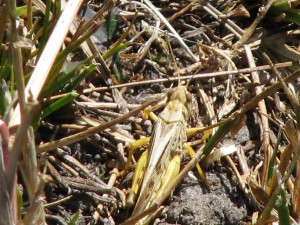
Grasshoppers It was a glorious day for birding; some of the birds we saw were flocks of Western bluebirds, kingbirds, a lark sparrow, a Lazuli bunting, ravens, chipping sparrows, goldfinches, bushtits, both spotted and California towhees, acorn and Nuttall’s woodpeckers, a Northern flicker, a Cooper’s hawk, an American kestrel, Western meadowlarks, brown-headed cowbirds, cliff swallows, Steller and scrub jays, Mountain chickadees, and many turkey families, their brood half-grown and comically awkward. We saw bright red Large Milkweed Beetles on blooming Indian milkweed, a late blooming Summer lupine, and did I mention grasshoppers? Thousands of grasshoppers. Almost the entire hike. A pair of ravens sat in the tall grass to the side of the trail with their beaks open, catching them as they leaped, as did Western bluebirds and others.
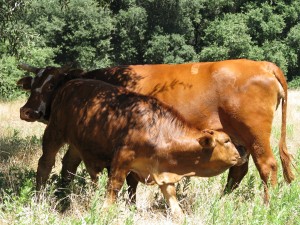
A hollow stump that looks like a TV set The Preserve is also home to cattle, and groups of the little ladies and their offspring dotted the landscape. Many bad cow jokes ensued (they’re in a bad MOOd; you can’t HIDE from them, they are UTTERLY charming, we’ve got to HOOF it past them, let’s MOOve it along… well, you get the picture), and although they watched us warily, they gave us no problem and we spoke to them soothingly as we passed by.
Lunch The Kanaka Loop Trail is easy up to the streambed crossing,

Good run-off for July then it goes uphill in areas which are bare due to elevation and past fires, so there is little cover. Many pines have sprouted up and their fragrance in the heat is intoxicating. However twice during the trail up through the trees we smelled greasy french-fries, and have no idea what plant or combination of flowers created that scent. It is an exceptionally beautiful trail and not difficult for the average hiker, but be sure to take a hat and lots of water, and a good attitude towards cows!
-
Dutchman’s Pipe

Vigorous Vines There are a few very peculiar specimens in my garden, thanks to Roger Boddaert. They have nothing to do with edible forest gardens, drought tolerant plants or permaculture. They simply are fun. One of which is the Dutchman’s Pipe (Aristolochia), named that because it’s very odd buds look something like… well… the pipe a Dutchman might smoke, I’m guessing. I’m thinking that the Dutchman was either blind or drinking heavily to put something that looked like this in his mouth! Another less imaginative name for this variety is Calico Flower. They look like hanging squash when they are immature.

Many buds waiting to open There are many varieties of this vigorous vine, each having different sized flowers. Mine has flowers in Summer and Fall, and they are sizable.

Flower Opening The vines can grow 30 feet high, and the plant can easily cover the side of a house. They originate in the Southern United States, preferring moist soil.

Flower opening more This is the larval host plant for the blue and black pipevine swallowtail butterfly, which don’t migrate this far west. Perhaps something else will find it useful.

Opened flower is flat The flower develops as a miniature version of its large self, and then continues to grow into these sack-like buds. When ready, they fold open to become flat, with the seed pod in the back. The flowers catch the wind and twist on their stems like decorations. Or like those things in the original Star Trek that flew across the cave and attached themselves to Spock’s back. So another fun and kind of creepy plant, which will provide shade, food for butterflies, and a lot of conversation starting. Gotta love it!

The one on the right is laughing! -
Zucchini
I have four vigorous zucchini plants. Why four? Because in winter with a lap full of comforter and gardening catalogs, the January eye peers back at July’s garden and the plants are smaller, the harvest never enough. What if something happens to one spindly seedling? Then there would be no zucchini, and summer without it just wouldn’t be the same. So four tiny sprouts went into the ground and four large plants are what I have. The zucchini harvest began several weeks ago. My daughter and I have happily eaten sauteed zucchini, seared zucchini, broiled zucchini and have even made sun-dried zucchini chips. It has been too hot to make Rosemary Zucchini Soup (see my recipe section). Zucchini bread uses far too little zucchini for the amount of calories it contains. The problem with zucchini recipes is that they use far too little zucchini! Zucchini has many health benefits, and is low-calorie, versitile, and is the butt of many summer-harvest jokes. I say this while considering who I know that I might unload some of the harvest upon.

Zucchini Chips ready to sun-dry on the roof We’ve both been harvesting under the enormous leaves this year’s zucchini plants have produced, and have kept up with it with few surprises. Until today.
In summer the days can run into each other with a speed that is breathtaking. We’d gone two days without checking. Then this morning after a second morning of trying to teach our old dog General the new trick of not hunting the chickens, which we were allowing out of their coop, we were on our way back to the house. It was hot already, the morning mist having burned off as if with an acetyline torch. My daughter carried strawberries in her hat and I was headed up to water stressed plants stranded without irrigation. Then I caught a glimpse of something along the edge of the raised bed. It was green. It was wedged against the corner and pressing against the edge of the wooden end. It was trying to break free. Trembling and exchanging fearsome glances with my daughter, I lifted a spiny leaf: There lay a six-pound zucchini.
This might not impress you. Perhaps you’ve recklessly gone on a summer vacation and forgot to mention to your neighbors that they should keep a cool eye on the big plant in the veg bed, and returned to find a green Moby Dick sucking up all the water in the garden. Perhaps you know already that the world’s record zucchini weighed 65 pounds. The world’s longest was 69.5 inches long, which is 6 and a half inches taller than I. Yet to find a six pounder trying to break down my much-cherished raised bed was something of a shock, especially when there was only a two-day gap between checking. This zucchini is only slightly less weight than my daughter at birth. Yet, I feel strangely deprived of maternal instincts toward it.
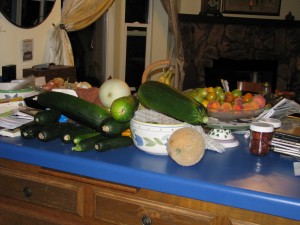
Big Zucchini How luxurious it is to complain about too much food. I’ll make steaks out of this big one, and perhaps donate the smaller ones to the Fallbrook Food Pantry. And begin to harvest the squash blossoms more vigorously!
-
The Importance of Leaving a Mess

Animal tunnels through a brush pile A clean yard is usually a pleasing sight. Picking up loose boards, plywood, sticks and logs keeps people from tripping, is encouraged by the fire department to reduce fuel for fires, and makes for more room to walk. Also, things live under debris and we’ve always been told to not poke our fingers into dark places (excellent advice! If a giant stuck his huge finger into our bedroom window we’d try to hurt it to make it go away, too!), and by eliminating so-called debris we reduce the chance of bites by snakes, spiders, or whatever bitey things may be living in your part of the world.
However, by reducing the debris, we also reduce habitat. Those bitey creatures need a place to live, as do the non-bitey creatures we are also displacing by removing wood. All these creatures are part of the intensely woven food web that keeps our planet populated and working. I cannot disagree about making your yard safe for children and pets, but if you have a space, make an area for habitat, too. Rope off a corner of your yard and tell your children and pets not to go into there, and leave bundles of sticks, pieces of plywood, old logs, piles of leaves, etc. in that corner. This is a home for the wild things, and your children can understand, observe and respect the fact that the world should not be made clean for them. Teach your children not to hunt and catch wild things, not to tear apart nests and destroy habitat. Observe and wonder instead.
In my yard, especially since I’ve had some sheds removed (in which racoons, wasps and possums raised families… I’m hoping to make a new place for them), I have stacks of plywood and old buidling materials which are good for recycling back into projects around my house. A junkheap, yes; a goldmine, yep. Under these stacks I have found such wonderful creatures that I didn’t even know came into my yard (perhaps they didn’t until the wood was left out).
The most exciting creature was a female Western pond turtle.

Female Western Pond Turtle In Washington, the Western pond turtles are endangered, and they are considered threatened in Oregon and are becoming rare in California and Baja California. Besides loss of habitat and an increase in pollution, one of the major factors in our native turtle’s slow demise is the release of non-native aggressive species such as the red-eared slider turtles. Red-eared sliders are America’s favorite pet turtle although they are native to the Southern United States. Due to releases they are everywhere. DO NOT RELEASE YOUR PET INTO THE WILD! As much harm has been done by and to domestic animals and wild animals by the releasing of pets as by habitat loss. A number of years ago there was a salmonella scare allegedly traced to pet turtles. The public’s response was to dump their children’s turtles in any waterway close by. Red-eared sliders have a distinctive red line by their eyes, and are named sliders because that family of semi-aquatic turtle can slide into the water quickly. They are omnivorous, aggressive, adaptable and become large. They eat anything that they can fit into their mouths, including the less aggressive smaller Western pond turtles.

Females have flat plasterons; notice her left stumpy leg. Finding a female Western pond turtle in the yard was fantastic, and I can only surmise that she had made her way up from the shallow streambed below the property to hopefully lay eggs. I haven’t found signs of a disturbed area yet where she may have layed, but am keeping the whole area protected just in case.

Long tails She is missing one front foot, probably bitten off while a youngster when something was trying to eat her. Before we knew she was a she, we thought of giving him a piratey name due to the missing foot and her semi-aquatic nature. Captain Blood was too fierce, but the author of that and other swashbuckling tales which had been made into movies is Raphael Sabatini. Now that is a terrific name. Go ahead and say it to yourself. See? So he became Raphael Sabatini until we checked her plasteron (the underside of her shell) and realized that it was flat not concave, which meant that she was a female. Males need concave plasterons so that when they are, um, amorous, they don’t fall off so easily. So she became Mrs. Sabatini. Long story… sorry. Nothing simple in my life. Anyway, we checked out Mrs. Sabatini’s health, and then released her into our small upper pond, which has an excess of mosquito fish and bugs, so that she wouldn’t be hurt with all the work that is being done down where she was found. We haven’t seen her since, so hopefully she is healthy and happy.

Good-bye Mrs. Sabatini! Under another piece of plywood I’ve found blue-tailed skinks (I couldn’t take a photo because they move too quickly), California Slender Salamanders,

California Slender Salamander gopher snakes, king snakes,

California Kingsnake and Pacific chorus frogs.
In a brush pile there are many birds hopping through, especially California towhees, Western fence lizards, alligator lizards, tree rats, mice and many other creatures.
In the ground are insects that you’d never expect. For instance while weeding one of my heirloom bulb beds I disturbed this huge caterpiller that had a horn tail.

White-lined Sphinx Moth Caterpiller The only horn tails that I’m familiar with are the tomato hornworms, but this guy was far away from my veggie patch, and instead of stripes had spots. We looked him up, and he is the caterpiller form of the White-Lined Sphinx Moth, also known as the hummingbird moth because of the way it hovers in front of night-blooming flowers to drink nectar. It is one of the important nighttime pollinators which few ever see. We put him back and left some weeds in for him.
Of course mason bees, among other pollinators, use holes in wood in which to nest. Some bumblebees nest in abandoned gopher holes, and they are the natural pollinators of many native North American plants such as blueberries (honeybees were imported from Europe with white settlers; until then native plants developed their flowers to attract and accomidate bumblebees, wasps, and hundreds of other native insects.)
All around my property there are logs and brush piles, and plywood layed down to choke out weeds in my veggie garden. Underneath there is a world of habitat. Isolated refuges for animals and insects who desperately need places to feel safe. So go ahead, throw down some mulch, some logs, a pile of sticks or some plywood. Know that you are doing the Earth a favor.
You May Also Like
Native Insects and IPM
-
Freestyle Peach and Apricot Tart
Freestyle Peach and Apricot TartAuthor: Diane C. KennedyRecipe type: DessertPrep time:Cook time:Total time:Serves: 8A handsome, rustic dessert that is easier to make than a regular pie or tart, and delicious, too!Ingredients- For Pastry:
- ½ cup cold unsalted butter
- 1¼ cups all-purpose flour
- ½ teaspoon cinnamon
- 1 beaten egg yolk
- 2-3 tablespoons ice water
- For Filling:
- ¼ cup granulated sugar
- 4 teaspoons all-purpose flour
- ¼ teaspoon freshly ground nutmeg
- 3 cups total sliced, peeled peaches and apricots
- 1 tablespoon lemon juice
- 1 beaten egg
- Powdered sugar
Instructions- For Pastry:
- In a mixing bowl cut butter into flour with a pastry blender until pieces are small pea-sized.
- Stir together egg yolk and 1 tablespoon of the ice water
- Graually fold egg yolk mixture into flour mixture.
- Using a fork, gently toss rest of ice water one tablespoon at a time into flour mixture, till all the dough is moistened.
- Gently press together dough until you can form a ball.
- If necessary, cover dough with plastic wrap and refrigerate for ½ an hour or more until the dough is easy to handle.
- Line a baking sheet with aluminum foil and sprinkle it lightly with flour.
- Place the dough in the middle and roll to a 13-inch circle; a chilled rolling pin will help with this, or lightly dusting the top of the dough with flour (don't overdo!).
- For Filling:
- Mix together granulated sugar, flour and nutmeg, then stir in fruit and lemon juice.
- Mound fruit mixture in the center of the crust, leaving a 2-inch border.
- Fold border up over fruit in an artsy, farmhouse sort of way, leaving the middle exposed.
- Combine the egg and 1 tablespoon water and use it to brush onto the top and sides of crust for browning.
- Bake in a 375F oven for 40-45 minutes until crust is golden and fruit is bubbling.
- To prevent overbrowning, you can cover the edge with foil for the last 10 minutes of baking.
- Cool 30 minutes on the baking sheet.
- Dust edges with powdered sugar, if desired.
- Serve as is, or with vanilla ice cream or whipped cream.
-
Cob Oven 3

The bottom layer stayed damp This is the third installment of the cob oven building story. In our last episode, we saw permaculturalists mounding and shaping sand, then beginning to build the first insulation layer on the sand form. The lack of straw made the mixture of sand and clay a little challenging to work with (straw would burn off so it isn’t used for this layer). When my intrepid daughter and I ventured out this morning in the July heat, we found that the wet burlap and newspaper had worked well for keeping the insulation moist. The mixture still on the tarps was a little drier, and a batch that had been put into a 5 gallon black nursery container so it was easy to grab, and then forgotten, had turned into a cylindrical brick. That was good news, for it showed that the mixture was a good one.

The mud was still good on the tarps Although hot today, it wasn’t nearly as searing as yesterday. Intermittent clouds blew over and created some humidity, but sheltered us from the direct sun and the breeze stayed pleasant. I’d already baked a layer cake and a peach/apricot tart after blanching and peeling the fruit, to make sure the oven was used during the cool part of the morning. We also sliced extra fruit and put them out on cookie trays on our roof to dry (look at my post about drying fruit, if you would like to know more). I made sliced polenta with cheese and egg for breakfast, and cleaned up a mountain of dirty dishes from the cooking and baking by 10:30 am; a good start to the day.
So we began layering the 2/1 sand and clay mixture, digging it into the layer below and being careful not to press inwards on the sand dome. We used our fists as guides to measure the same width all the way around, guiding with our other hand. If you don’t like having dirty fingers, or you value your fingernails, this isn’t the hobby for you. I think ninja masters must toughen up their hands by building cob ovens. Certainly no physical therapy I might have to do for my months-old sprained wrist could equal this kind of exercise!
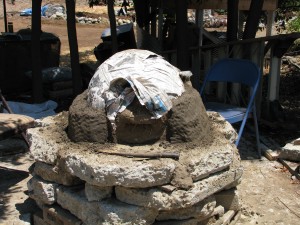
Slowly working up the sides While we worked we’d periodically hear chirps from a palm tree where a hooded oriole family was being fed by diligent parents. We were also watched most closely by our chickens; Emerson (who was supposed to have been a hen) practiced crowing.
Despite our drier mud, the sides liked to succumb to gravity. We used 2×4’s to press mud up from the bottom, similar to rolling out pastry dough. To make the front even, I took a mortar spatula and sliced off extra mud, then patted it even.
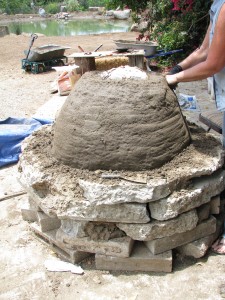
A bald pate The most valuable tools we used were a spray bottle of water, the pieces of 2×4’s and folding chairs. A good arguement for making the oven stands higher is to save your back when mudding!
Finally the top was attained!
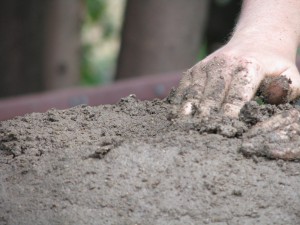
Closing up the top! The next part was to use the board to smooth out all the sides and make a beautifully rounded shape. An area in the back was a little slumpy due to extra wet mud, but it wasn’t a big problem. After it was smooth, we took the board and gave the dome gentle whacks to compress the insulation.

Using a board to shape the dome After about 3 1/2 hours today, and 45 minutes yesterday, the first layer is finished. All during the process it felt as if we were creating an entity. I was trying to puzzle it out as we worked, and I think working with soil from our own property, mixing with hands and feet, and the rounded soft shape of the earthen dome all created that illusion. Also, the handle of the door that we made of cob looks like a big nose. My daughter dubbed the oven Harry Mud (and all you Star Trek Classic fans will love that name even more).
The next phase will be to mix straw with the sand and clay and create another layer over the insulation layer. That process will be in the near future, but definitely after our hands heal up from the sanding they received today. Hot and humid as it was, we had a real sense of accomplishment and pride when we finished the bones of Harry Mud.
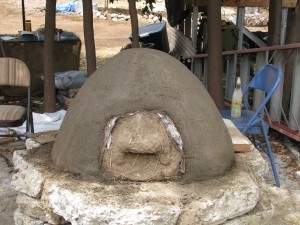
Harry Mud -
Cob Oven Part Deux (and still not done)
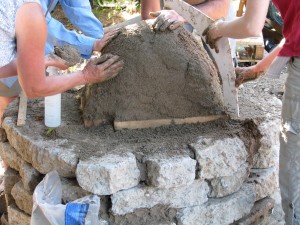
Mounding sand within a template Today three members of the San Diego Permiculture Guild joined my daughter and I in another go at finishing the cob oven. We had only two hours in which to work on a warm morning which was rapidly turning into a hot day. With the base already built, we now needed to build a sand dome which would serve as the inside mold for the oven. Mixing sand with water until it clumped wasn’t as easy as it looked in the books, and it never really clumped. However, after a long effort the group did a fantastic job making a sand mound of correct dimensions.
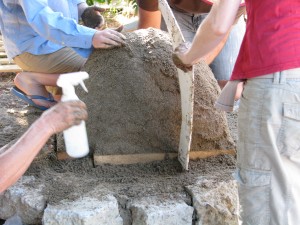
Measuring and spraying the sand with water My daughter and I had made a template to show how high and round the sand should go, and eventually the sand dome became something of which Sir Christopher Wren himself would of been proud. It is a shame that after the cob is added the sand will be scooped out, but the hollow that is left will be perfect for the roiling flames of the fire, with no cold spots.
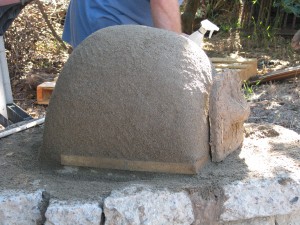
A beautiful mound, with a door Our choices for a door was to make one out of wood with insulation on the inside, cut one out of the cob and then create one, or make one out of cob ahead of time and build around it. My daughter and I made one the day before, and albeit topheavy one, and propped it up so cob could be built around it.
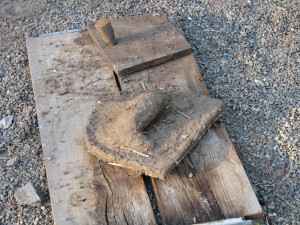
Mud door The sand dome was then covered with wet newspaper for protection from the cob.

The door looks like a big-nosed creature! Next came the insulation layer, which was two parts sand to one part clay. No straw was added because it would catch fire. The mud we used was a batch in a wheelbarrow that had been worked (all the hard pieces either discarded or squished) by the group during the first oven building session. We kept it wet and covered so that the clay would soften. This became a problem, though, because the clay was already saturated when we worked in the sand. As the sides were beginning to be built, the cob was soft enough to bulge out at the sides. Thinking quickly, the group put pieces of wood around to use as a frame while I began mixing another batch from the rest of the mud in the wheelbarrow and sand, using my feet. Others leant their feet to the project.
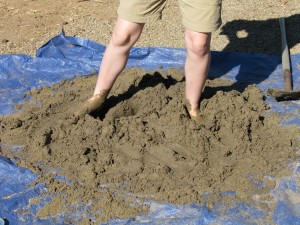
The cob dance This batch was wet as well, but not as wet as the first batch.
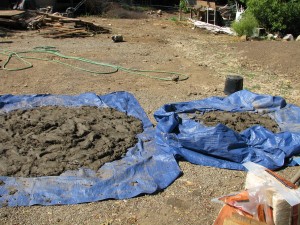
Two sand and mud mixes, the left one too wet The theory was that since the clay was in water, the heavier particles sunk to the bottom displacing the water, and so the first batch of mud from the top of the wheelbarrow held more water than the second, lower batch. This made perfect sense.
When building the insulation layer, care must be taken not to press into the sand mound. The first layer of insulation should be 3-4 inches wide. Each layer must be pressed into the one beneath so that the cob is uniform and doesn’t dry in layers. At first it is built straight up, then gradually around the curve of the dome.
With only 45 minutes to go, and the sides bulging enough to prevent any more building, we opted to take out what was already built and start in again with the drier mud mixture. This, too, needed some wooden support, but it was by far easier to use than the first batch. The wetter mud was spread out on a tarp to dry out more in the sun.
With the time coming to a close we stopped, covered the mound with wet burlap and the mud with tarps. Perhaps the next time will bring about the finale of the oven, and the long-hoped for pizza!

Covered with wet burlap until next time -
Oatey Scones

Oatey Scones I’ve made traditional scones for years as a breakfast treat. They are quick, easy to make from scratch, and oh! so good. However, when I found this recipe for oatmeal scones in Cook’s Illustrated (September and October 2003), it was my lucky day. I really love these tasty devils. The trick is to toast the oatmeal before incorporating it into the batter.
Oatey SconesAuthor: Cook's IllustratedRecipe type: BreakfastPrep time:Cook time:Total time:Serves: 8These toasted oat scones are heavenly, especially with mascarpone cheese, fresh fruit or lemon curd.Ingredients- 1½ cups old-fashioned rolled oats or quick oats
- ¼ cup whole milk (I've used 2% milk just fine)
- ¼ cup heavy cream
- 1 large egg
- 1½ cups unbleached all-purpose flour
- ⅓ cup sugar
- 2 teaspoons baking powder
- ½ teaspoon salt
- 10 tablespoons cold unsalted butter, cut into small cubes
- Coarse sugar for topping.
Instructions- Heat oven to 375 degrees F.
- Spread oats evenly on a baking sheet and toast in oven until fragrant and lightly browned, about 7-10 minutes, stirring twice; cool.
- Increase oven temperature to 450 degrees F.
- Line a baking sheet with parchment paper.
- When oats are cooled, measure out two tablespoons and set aside.
- Whisk milk, cream and egg in a large measuring cup.
- Stir together flour, sugar, baking powder and salt until combined.
- Scatter cubed butter over the top of the dry ingredients and with your fingers, a fork or a wire pastry blender incorporate until mixture resembles coarse cornmeal.
- Stir in cooled oats.
- Using a rubber spatula, fold in all but a tablespoon of the liquid ingredients until large clumps form; continue gently folding until dough forms cohesive mass.
- Dust work surface with reserved oats and a little flour.
- Turn wet dough (it will be damper than you'd expect!) onto surface and gently pat into a 7-inch circle about 1 inch thick.
- Using a bench scraper or chef's knife, cut dough into 8 wedges and set about 2 inches apart on parchment-lined baking sheet, reshaping as needed.
- Brush tops of scones with reserved liquid and sprinkle with coarse sugar.
- Bake until golden brown, 12 -14 minutes.
- Cool scones on baking sheet on wire rack for 5 minutes, then remove scones to cooling rack and cool to room temperature (so they won't fall apart), about 20 minutes.
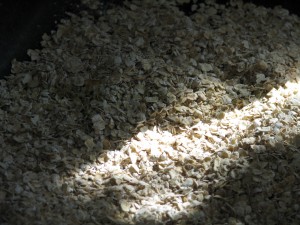
Toasting the oatmeal makes all the difference Watch the oats carefully so that they don’t burn, and give them a stir now and then. While they are achieving all that wonderful toastiness, combine the cold butter and the dry ingredients until it looks like coarse cornmeal.
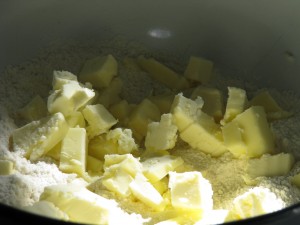
Incorporate butter into flour The batter will be suspiciously wet; don’t be alarmed. The dry oatmeal will soak it all up as the scones bake, and it all works out happily in the end. However it will be a little difficult to cut the scones and transfer them to the baking sheet; a little reforming might need to take place, but that’s okay. Bake until golden brown.

Bake until toasty brown The scones will be brittle until they cool, so let them sit for about twenty minutes or so (if you can!) before serving. If you are serving these to guests or as part of a larger breakfast, this waiting time can be a good thing… most other scones want to be served hot from the oven and leave you no time to do extras.

Serve cooled, so they won't fall apart Oatey scones are wonderful plain, with sweet butter, or (my absolute favorite) with mascarpone cheese and fresh fruit. The wholesome toasted grain flavor of the scones make a fabulous backdrop to the fresh plain flavor of the cheese and the sweet/tart flavor of fresh strawberries, peaches, plums, or whatever you have.

Serve with mascarpone cheese and fresh fruit - Animals, Gardening adventures, Heirloom Plants, Other Insects, Permaculture and Edible Forest Gardening Adventures, Photos
Ladybugs
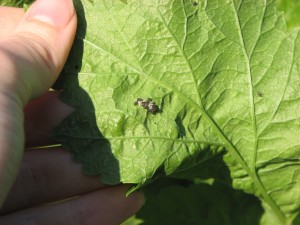
Insect Egg Cluster on Parsnips My daughter’s eagle eyes spotted a cluster of insect eggs on the underside of our parsnip leaves. Many moths and butterflies are laying their eggs right now, so seeing a little white pearl glued to the underside of a leaf isn’t strange.

Unknown Butterfly Egg The parsnips in question are late in the garden; they’ve been in the ground for a while and don’t like the heat so they are stressed. Just as we become sick when stressed, so do plants, and the parsnips are under attack by aphids and ants. Ants feed off of the sticky excretions of the aphids, so they have become ranchers. Ants cultivate herds of aphids on stressed plants, grooming them and collecting their, um, poo. So trying to put that image out of your head, if you see a lot of ants on a plant, expect aphids to be there also. Aphids have rasping, sucking mouthparts that they use to eat away at a plant and suck the vital juices out of it. Sorry, there is another image that you probably don’t want. How to get rid of aphids? The natural way would be to make sure your plants aren’t stressed, and allow ladybugs to flourish in your garden.
So what would you do if you saw THIS in your garden?

Ladybug Larvae Eating Aphids Run screaming? Hit it with a trowel? Wait! You shouldn’t do any of those things! These are baby ladybugs! Just as many children do not resemble the adult into which they will grow, ladybug larvae look like something that Godzilla might take on… if the larvae were the size of a house or something, which they aren’t. Okay, I’m digressing here.
Back to that cluster of eggs my daughter saw. They were hatching ladybug larvae!

Hatching Ladybug Egg Cluster I’ve never seen them that small before. Good news for the garden: rescue forces are being hatched!

Ladybug Larvae Hatching Ladybug larvae eat more aphids than the adults do (just think of teenagers and refrigerators). When they’ve grown as much as they can, they will transform in to the ladybugs that we all know and love (even though we sing a horrible song to them about leaving the garden to check on a false alarm about fire and their children. And people complain about not being able to keep ladybugs in their yards!)

Ladybug! So if you see a creepy bug on your plants, the sides of your house… anywhere… don’t squish him! It may be part of the Ladybug Larvae Special Forces out to break up the illegal ant ranches in your garden!
You May Also Like
Native Insects and IPM
-
Roasted Radishes, or What Not to Bring to a Party

Radishes About to be Roasted I don’t have much luck bringing food to events. When I need to bring food to a party, I seem to have some strong internal drive to fix the most inappropriate thing, and go through agonies to make it. Some mischievous elf in my head sends down strange images to my consciousness telling me what to make as soon as I volunteer. The food is good…. it is usually a recipe that I’ve made before and think is interesting and different. I’ve brought cornbread made with blue cornmeal to picnics, and people have shunned it thinking it was blueberry flavored, or an ugly homemade unfrosted cake, and gone on to the easily recognizable chain-store brand cookies lined up in a clamshell container.
When asked to bring a cake, I make some complicated thing that never looks as good as the picture in my head. My cakes are very tasty, but my decorating skills are, shall we say, possible candidates for cakewrecks.com. I’ve done a cake for a grand opening of a park where I simulated a pond with cattails made of broken pretzel sticks, or that is what it was supposed to look like. I made not one but three types of jelly roll cake with three different fillings for a bridal shower, and the day was so hot that the cakes kept sticking and sliding and I had to keep running up and down the stairs to the garage refrigerator to chill them. I actually sat down and cried because I was so frustrated and had spent the entire day baking in a heat wave with a mess to show for it. I ended up arranging the individual cakes in a flower shape and sprinkled dried rose buds and edible glitter around. It looked pretty, if amateurish, but I knew they’d taste wonderful. It was so hot in the car I thought I would be redecorating my Prius with homemade lemon curd and chocolate filling. I had to stick the large pan in the surprised hostess’s refrigerator, which took up a lot of space. Then when it was cake time, I found that the jelly rolls had already been sliced up and plated so that you couldn’t tell the flavors apart and all the rosebuds thrown out, without the bride-to-be or anyone else even seeing it. I could have just made a sheet cake and everyone would have been happy.
I’ve brought vegetarian main dishes that no one but my children and I seem to want to eat, even though they aren’t creepy tofu-y mock turkeys or anything. Labeling a dish ‘vegetarian’ is like putting a curse on it, although many dishes other people bring don’t have meat in them either. To be ‘vegetarian’ means scary, weird food of unknown origin that probably tastes like sprouts or tofu or whole wheat.
I know when my offerings are rejected, it isn’t really the food… the food tastes good. That is, if anyone dares eat it. It is just out of place, just as I am at most parties. My food and I belong at small gatherings of friends who are expecting a new experience. Who want to try something different and talk about it. Who enjoy subtleties of flavor and the goodness of fresh herbs and spices. Who don’t judge on how good a dish appears, but how it tastes. Who are forgiving and especially have a good sense of humor.
Which brings me to another example of something not to bring to most parties: roasted radishes. Especially to one where there is a lot of drinking going on. Everyone will wonder what they are and no one will touch them because there is perfectly predictable Albertsons layered nacho dip and bagged chips right next to them. Since roasted radishes aren’t the prettiest looking things, they will be the last edible thing on the buffet table besides the really, really cheap half-finished bag of corn chips, and when everyone is really, really drunk, some unpleasant personal comments might be said about their appearance. The radishes will be cold and soggy by that time, too, and not the best thing for someone with a lot of alcohol in his or her system to put into his or her mouth at that point. However, if served at home as an interesting appetizer along with something less scary-looking, these are just great. No, really, they are. You should try them. I was impressed enough to try to force them on strangers at someone’s home, so you should be, too.

Roasted Radishes dressed up for a party Growing radishes is very easy and quick, and roasting them gives you something to do with them. Radishes only take a few weeks to mature, so they are often the first thing up and ready in the garden. Give this recipe a try the next time you roast veggies; many people who don’t really like radishes enjoy them this way.
Roasted RadishesAuthor: Diane C. KennedyRecipe type: Side DishPrep time:Cook time:Total time:Roasting radishes changes their flavor and texture to something new and delightful.Ingredients- Three bunches radishes, preferable different colors if you can find them
- Three tablespoons extra virgin olive oil
- ½ teaspoon dried thyme leaves
- ⅛th teaspoon cayenne
- Freshly ground black pepper
- Coarse salt
Instructions- Preheat oven to 425 F.
- Wash radishes and cut all but a little tuft of radish leaves off of each radish. Don't cut off the roots.
- In a medium bowl whisk oil, thyme, cayenne and black pepper.
- Add radishes and toss to coat.
- Pour radishes onto a flat baking pan and drizzle with any remaining oil mixture.
- Roast 40 - 50 minutes, turning once midway through roasting, until a knife easily slides into a radish and they are lightly browned.
- Sprinkle or grind coarse salt over the tops.
- Serve immediately.