- Animals, Bees, Birding, Compost, Fungus and Mushrooms, Gardening adventures, Heirloom Plants, Hugelkultur, Living structures, Natives, Other Insects, Perennial vegetables, Permaculture and Edible Forest Gardening Adventures, Photos, Ponds, Rain Catching, Recycling and Repurposing, Reptiles and Amphibians, Seeds, Soil, Water, Water Saving, Worms
October Garden
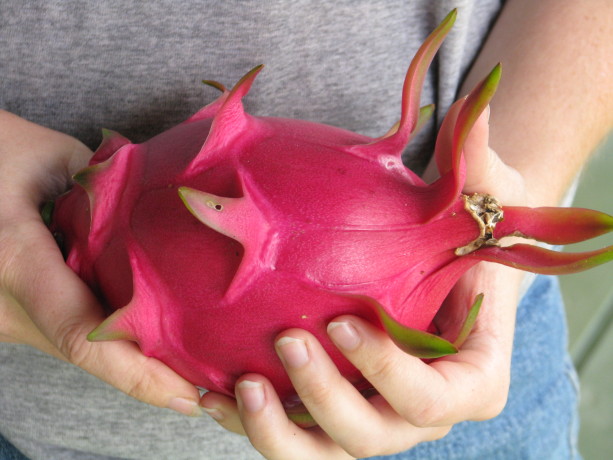
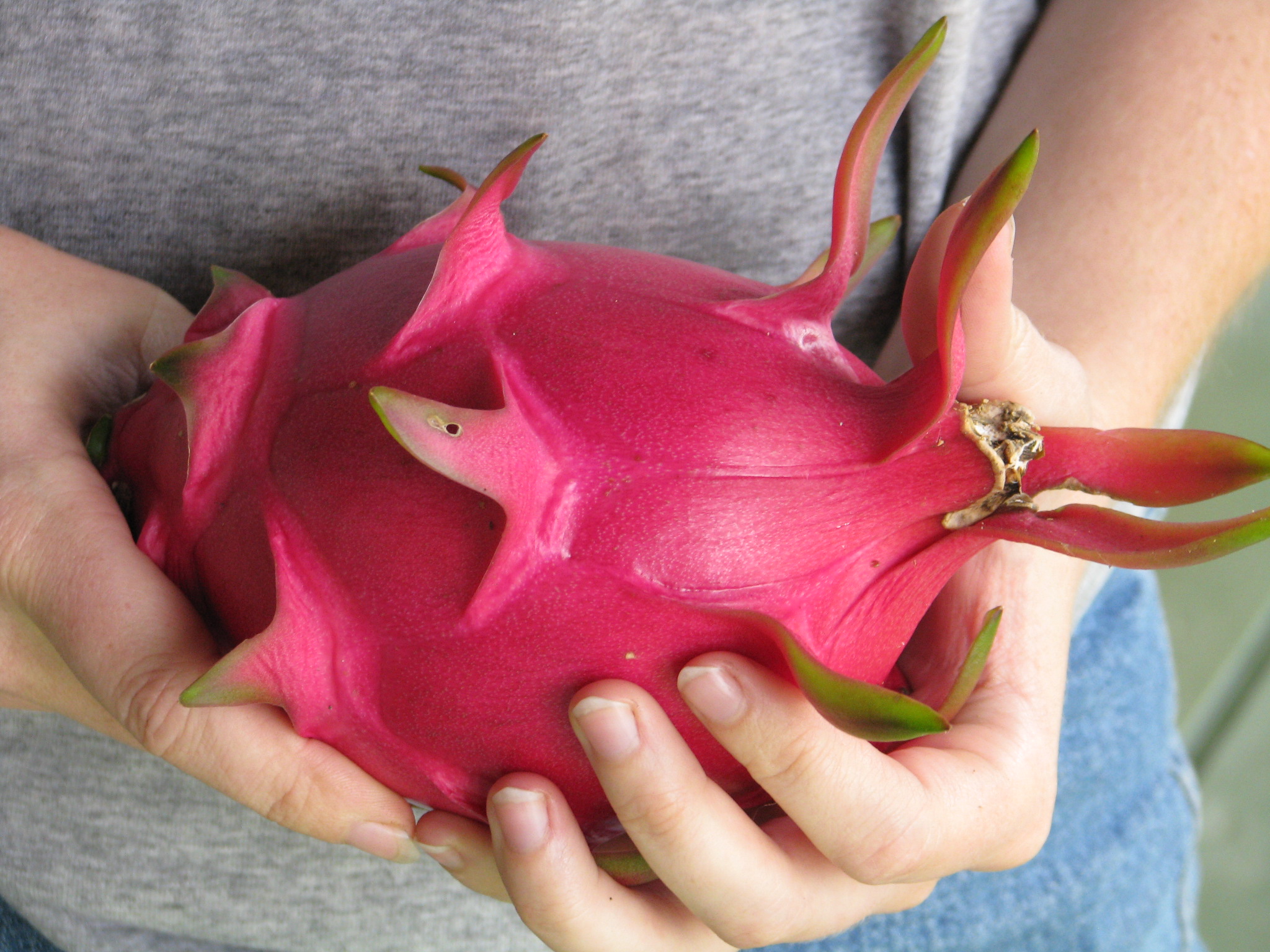
A huge dragonfruit; this kind is white inside. October is one of my favorite months, even when we’re on fire here in Southern California. This year we’ve been saved, and October is moderate in temperature and lovely.
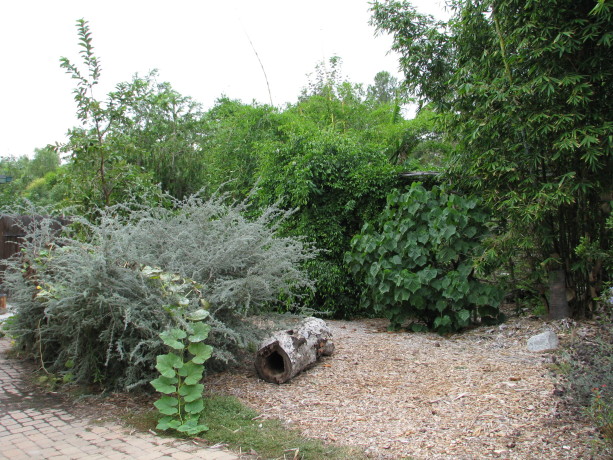
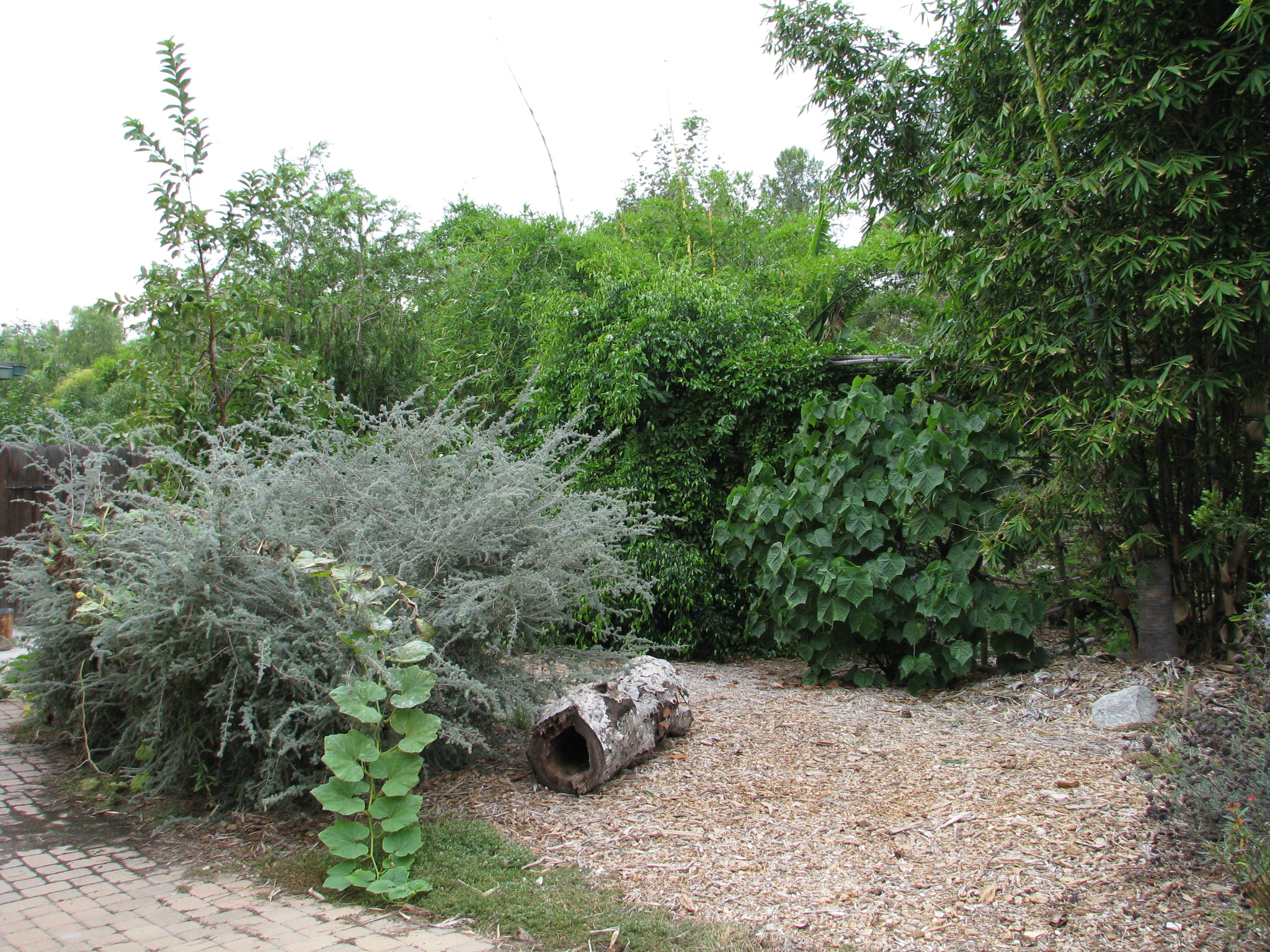
A volunteer kabocha squash vining its way through a bush. 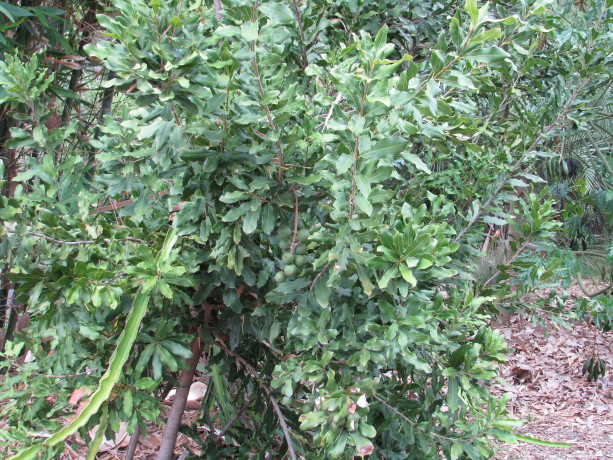
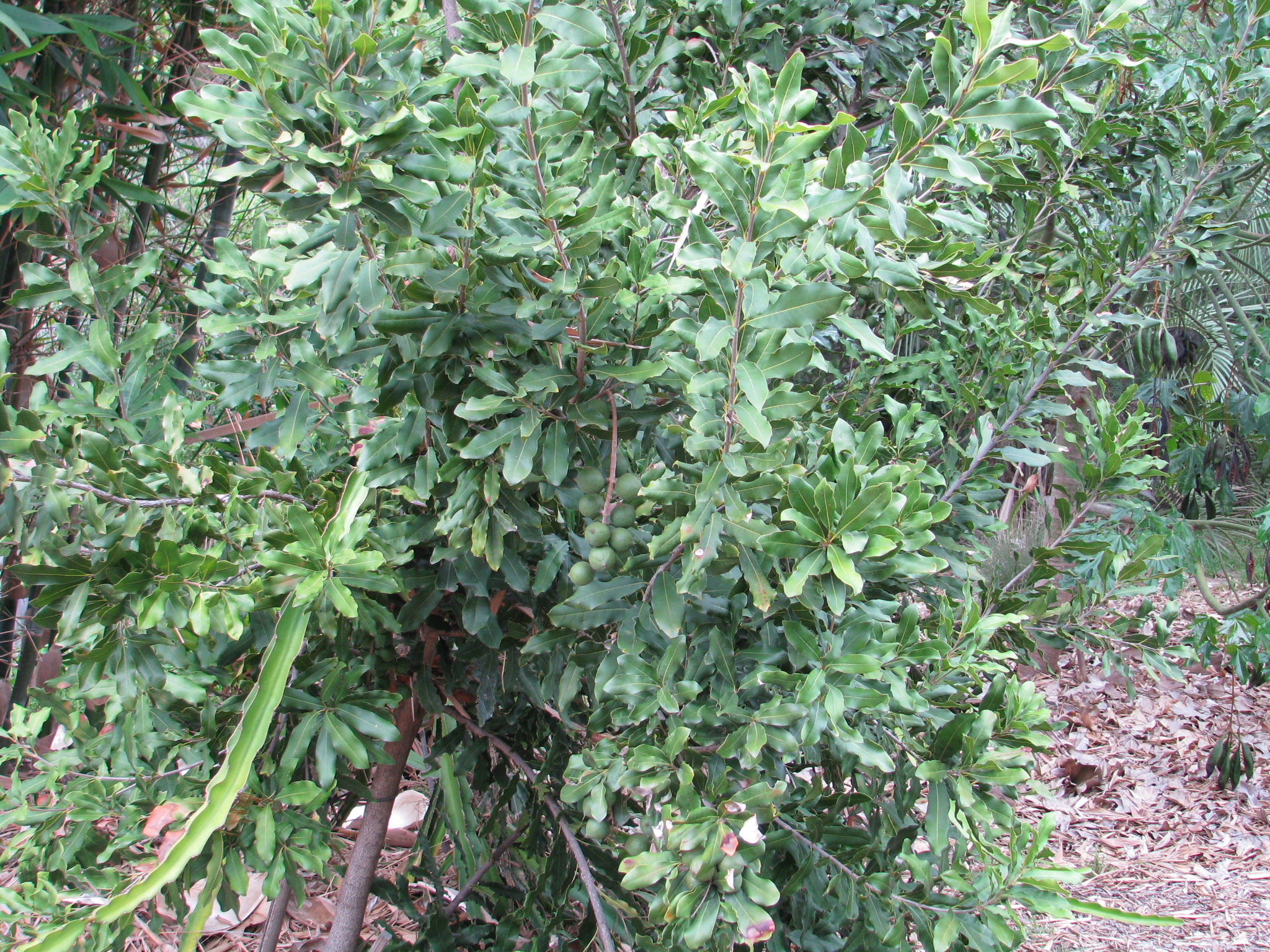
Our first ripeing macadamia harvest from a 3 year old tree, with a dragonfriuit snaking through. 
Edible hibiscus, volunteer nasturtiums and pathway across the rain catchment basin. 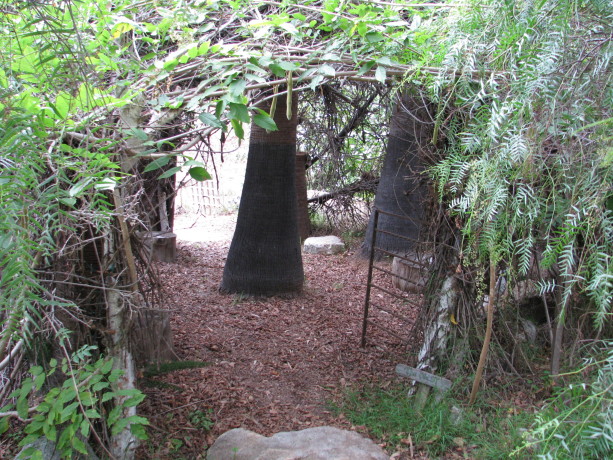
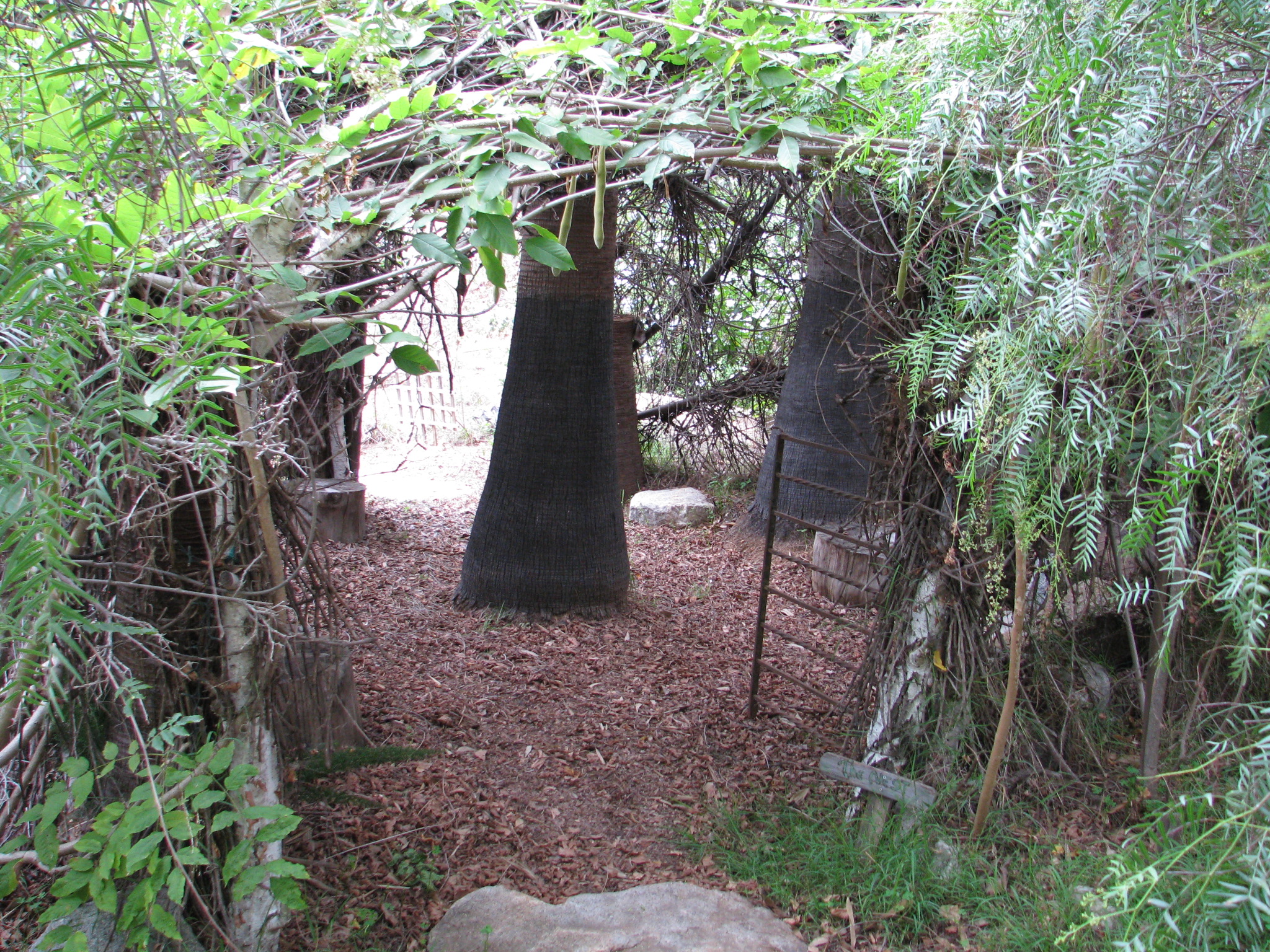
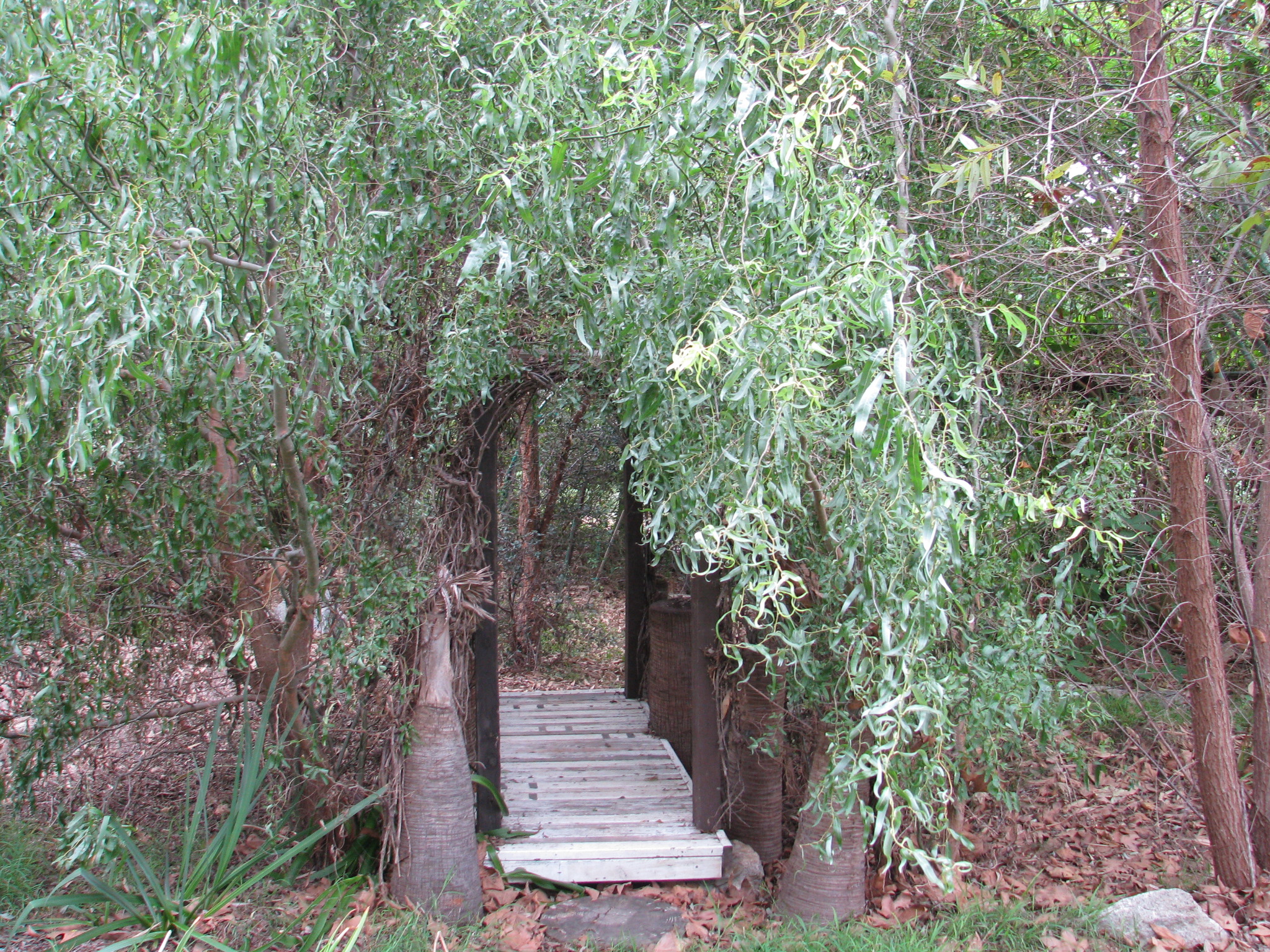
Into the wisteria-covered Nest. Summer has lost her vicious grip and we have time until the holiday rush and winter cold. Finch Frolic Garden has withstood the heat, the dry, the inundations, the snow and the changes, all without chemicals or much human intervention.
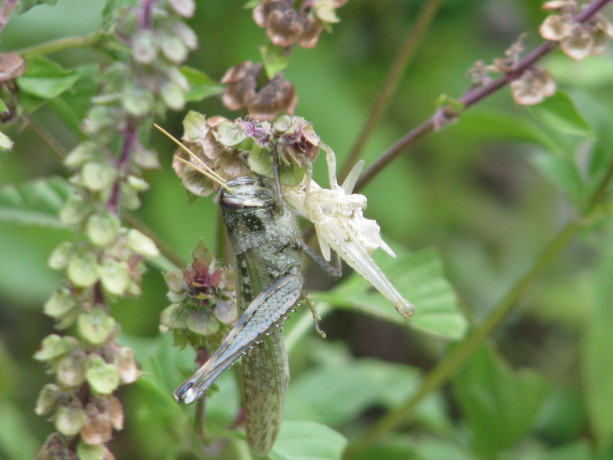
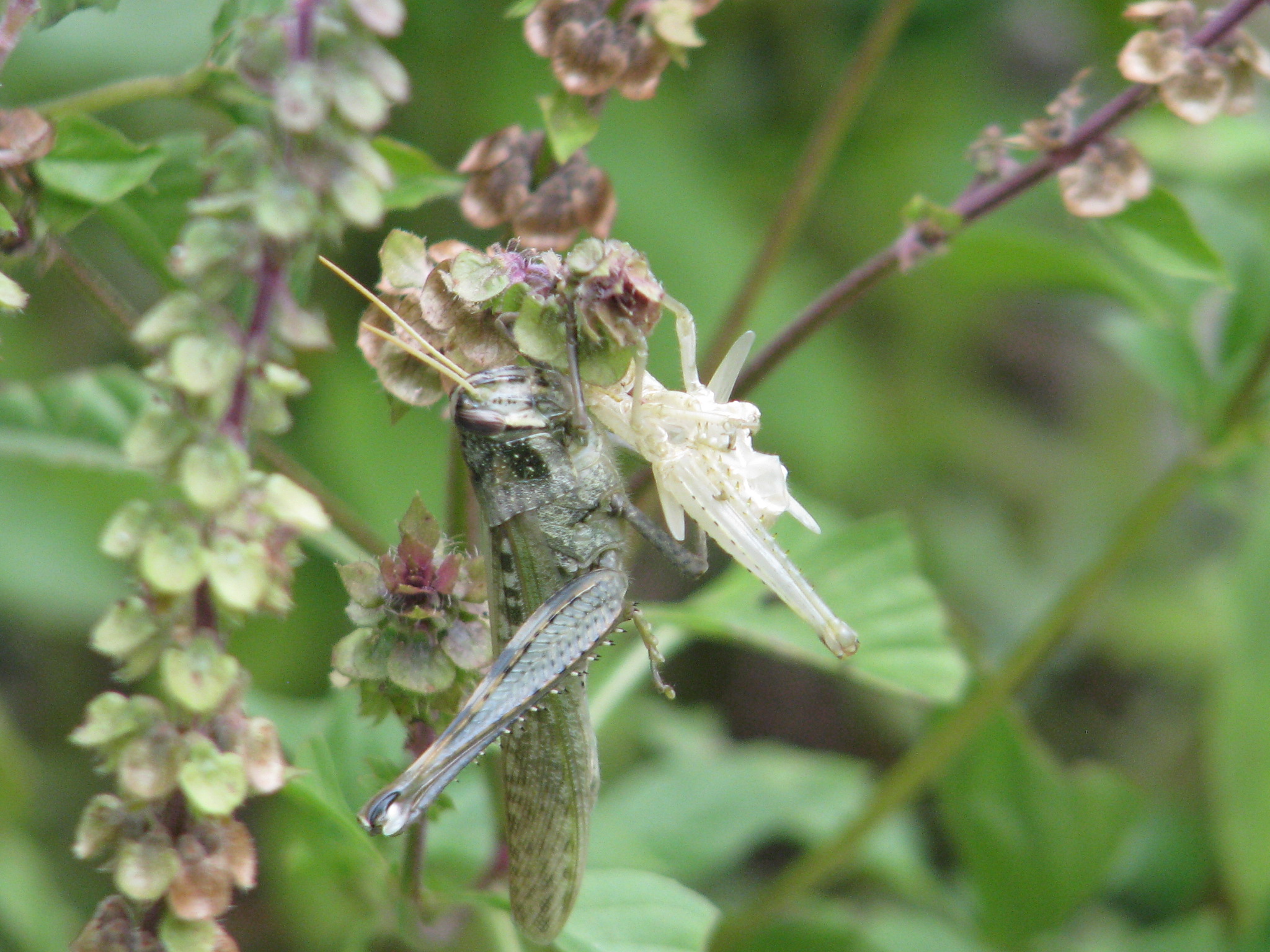
Grasshopper freshly out of last instar. 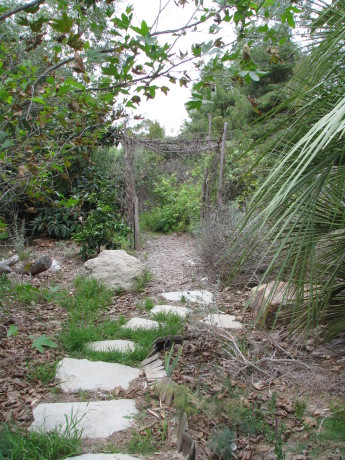
The curly willow trellis. We’ve lost some trees and shrubs this year, but that is mostly due to the faulty irrigation system which delivers too much or too little, and is out of sight underground.
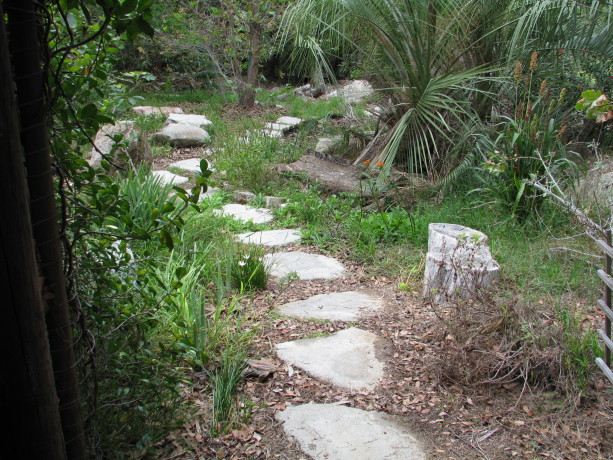
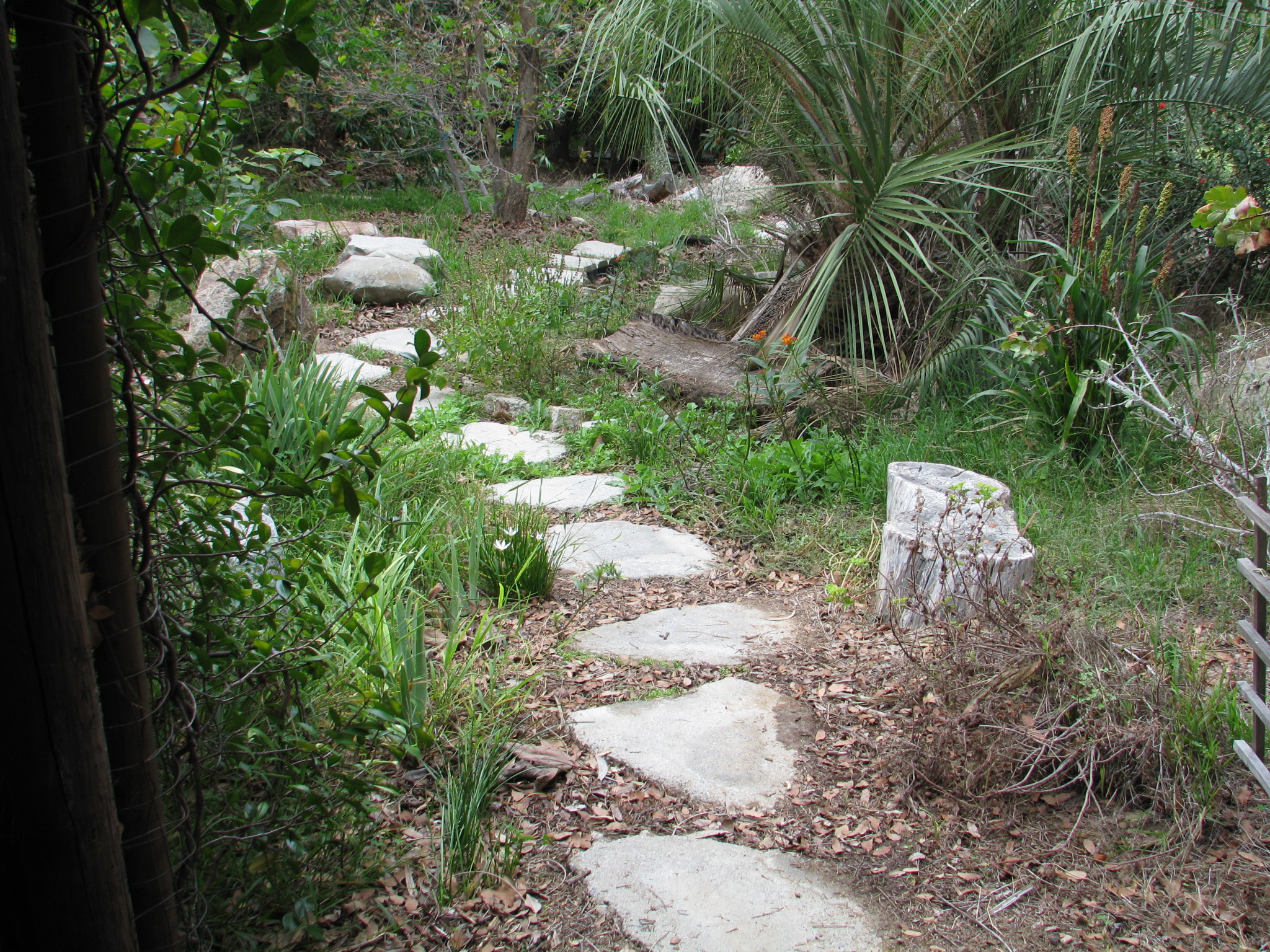
Urbanite pathway. 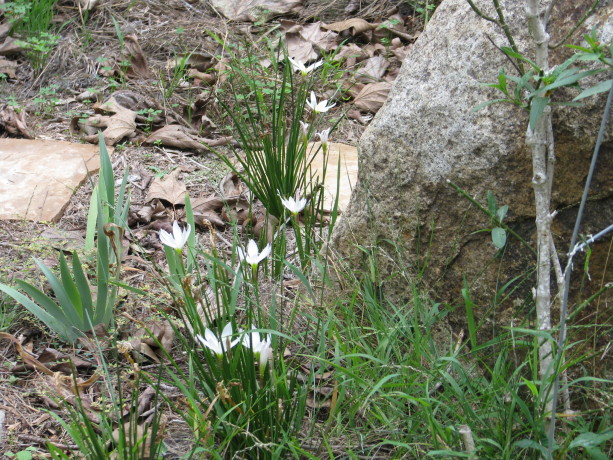
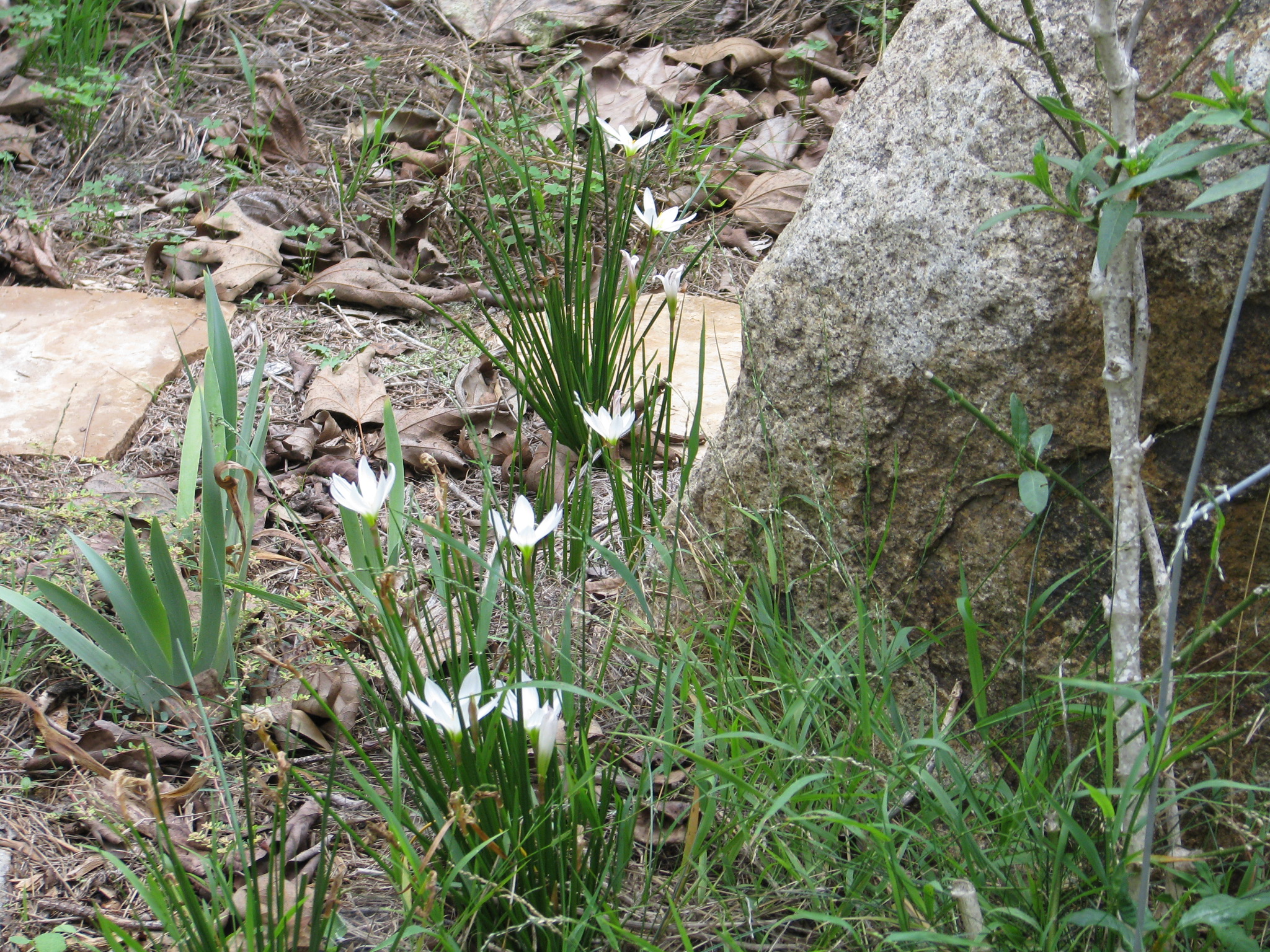
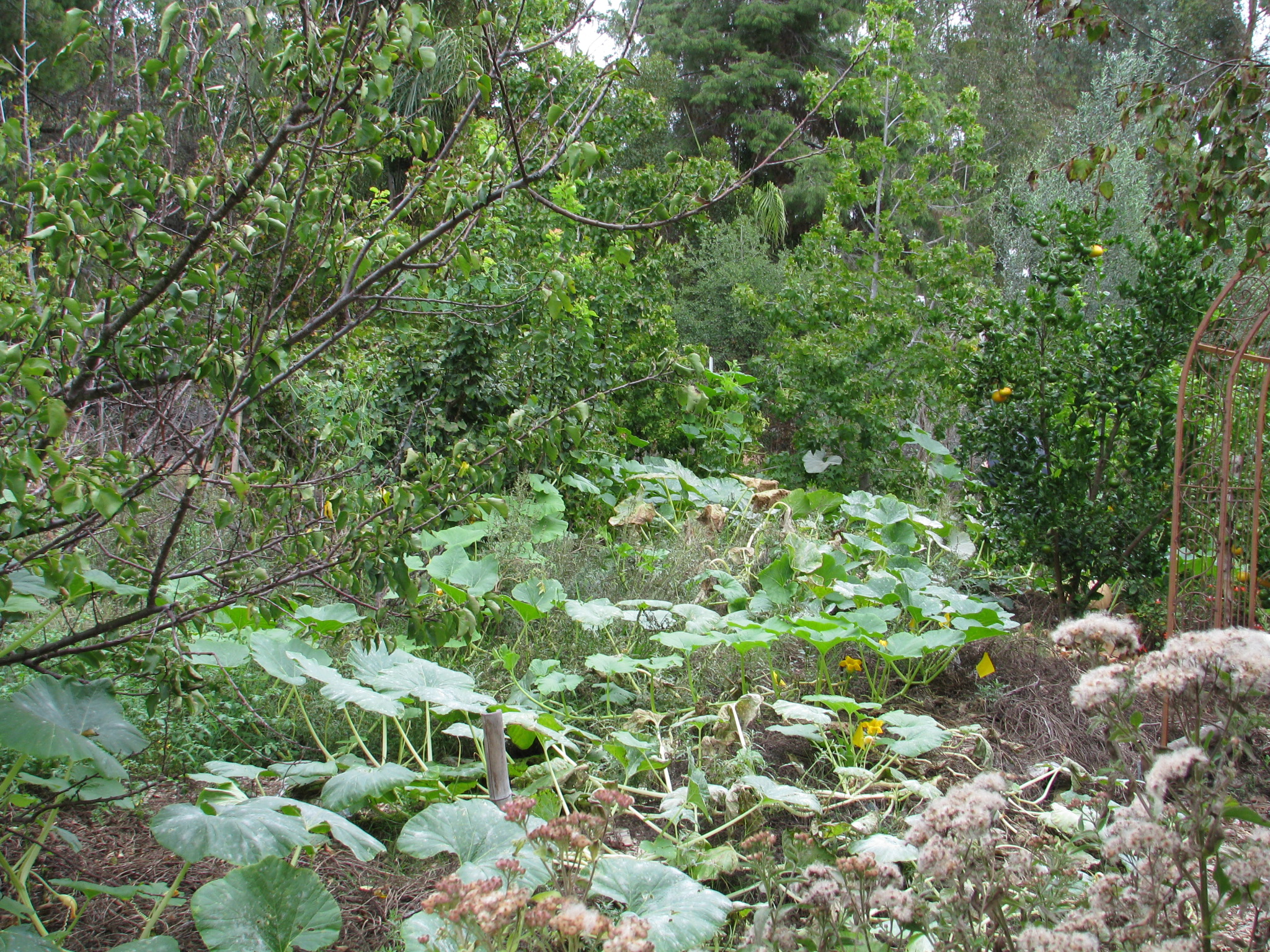
Bulbs will pop up year round for wonderful surprises. Permaculture methods in sheet mulching, plant guilds, swales, rain catchment basins, and the use of canopy have pulled this garden through.
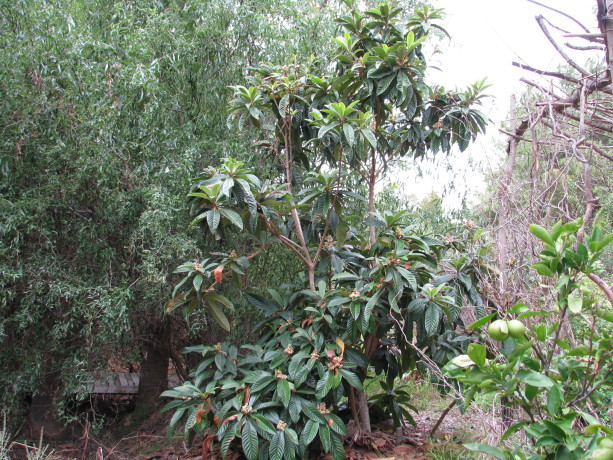
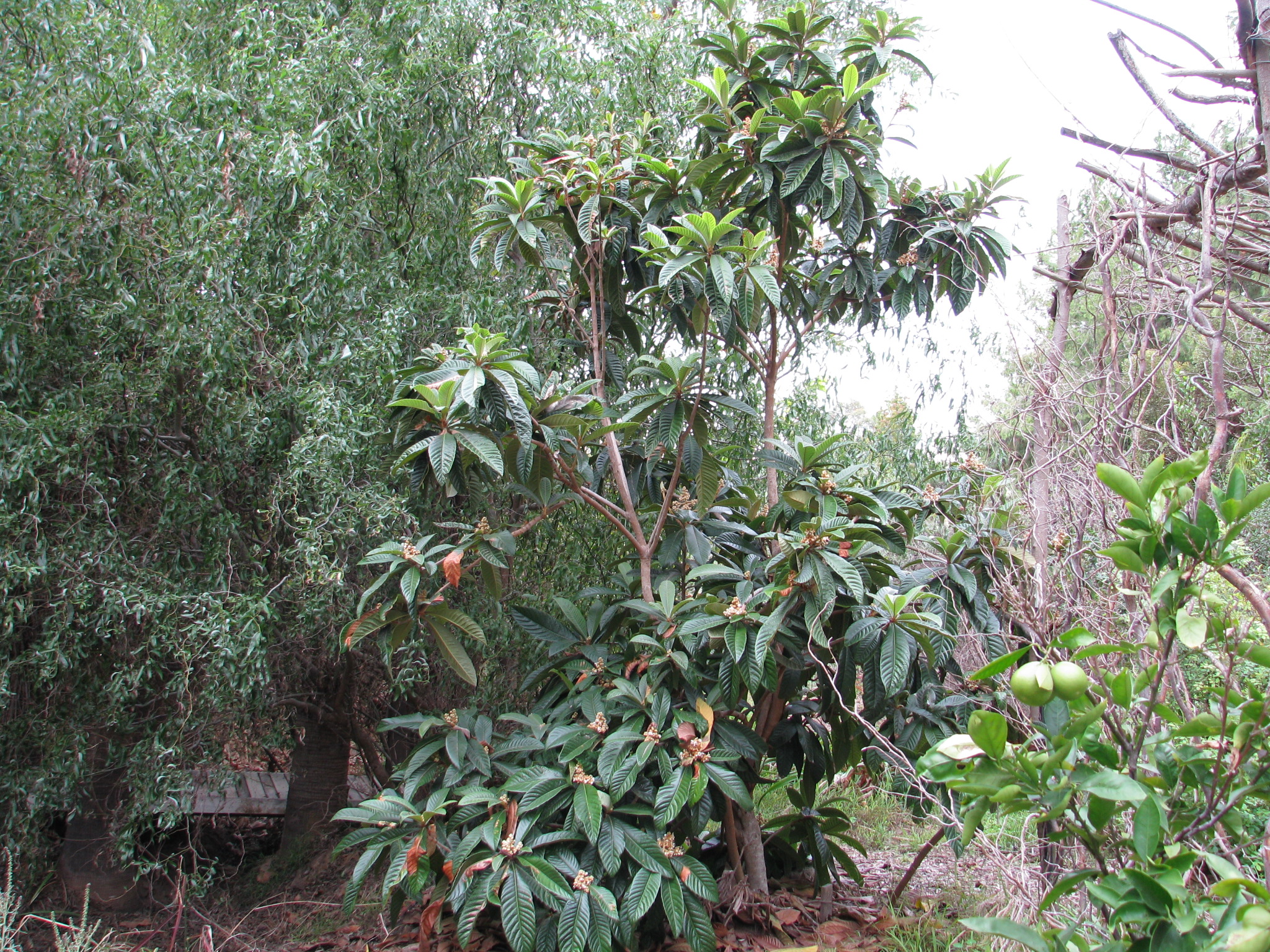
Loquat in bloom. 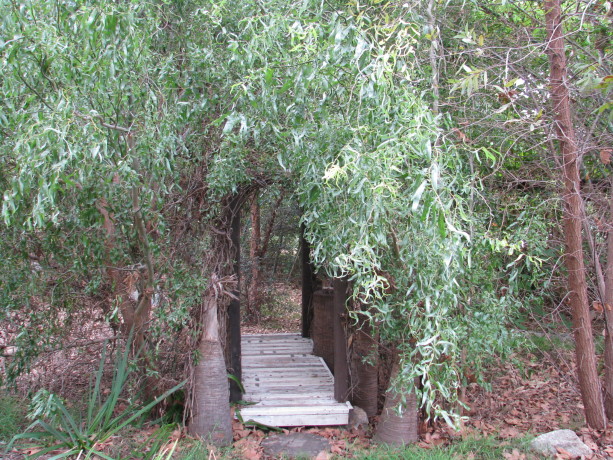
Bridge over currently dry streambed. 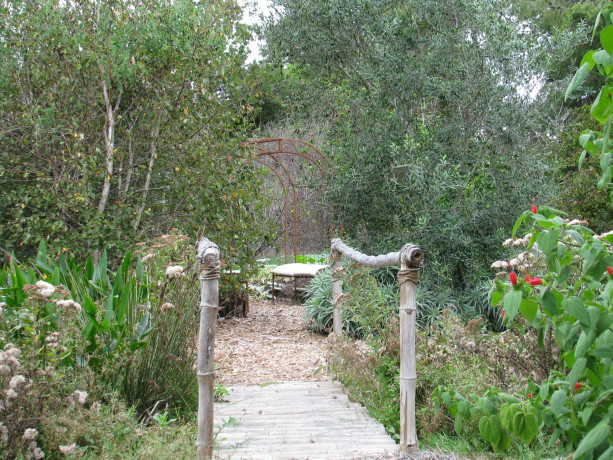
Bamboo bridge. 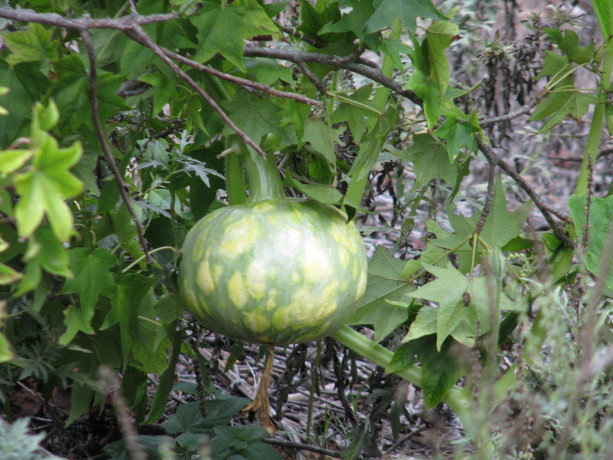
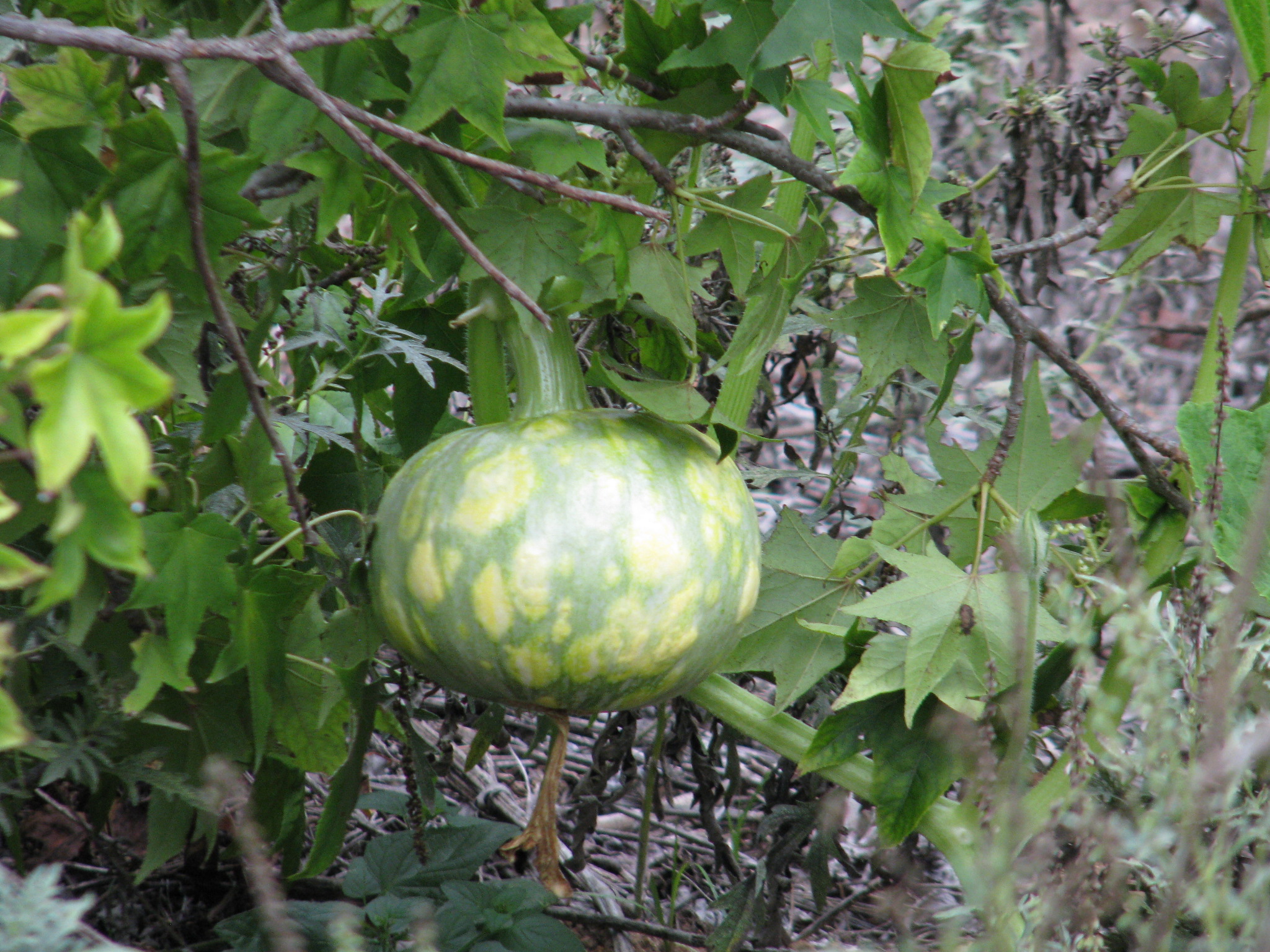
A gourd in a liquidamber. The birds, butterflies and other insects and reptiles are out in full force enjoying a safety zone. A few days ago on an overcast morning, Miranda identified birds that were around us: nuthatches, crows, song sparrows, a Lincoln sparrow, spotted towhees, California towhees, a kingfisher, a pair of mallards, a raven, white crowned sparrows, a thrush, lesser goldfinches, house finches, waxwings, robin, scrub jays, mockingbird, house wren, yellow rumped warbler, ruby crowned kinglet, and more that I can’t remember or didn’t see.
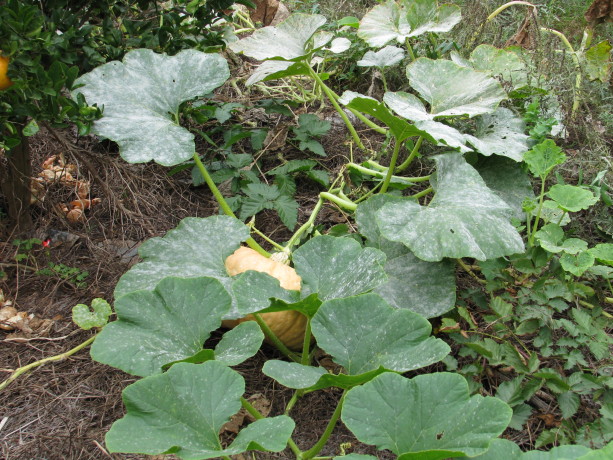
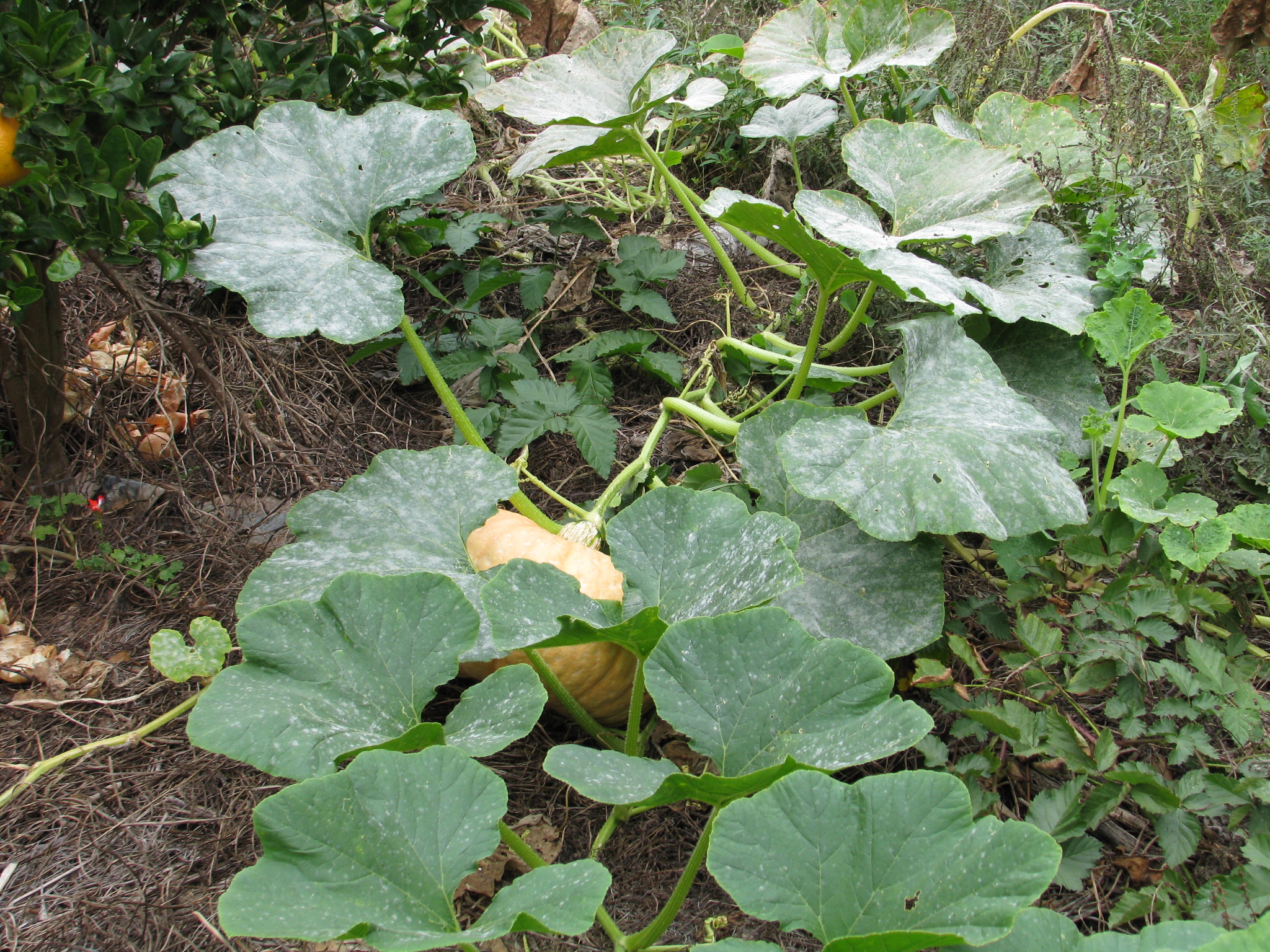
Squash! 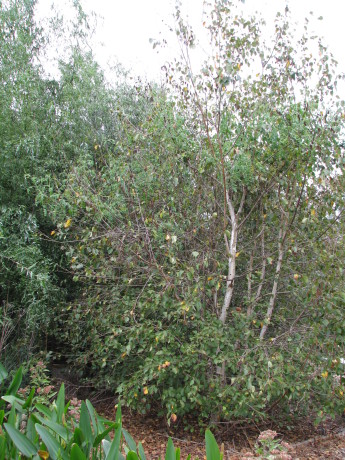
This birch has strange red fruit in its top boughs… 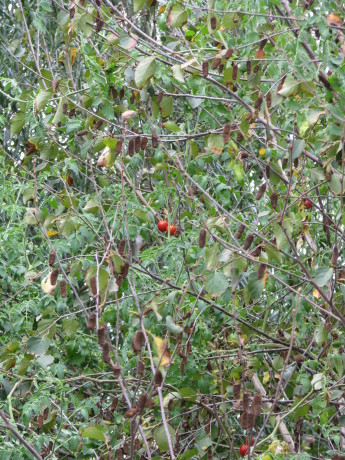
…a volunteer cherry tomato that is fruiting inconveniently ten feet up. Birds have identified our property as a migratory safe zone. No poisons, no traps. Clean chemical-free pond water to drink. Safety.

Squash and gourds happily growing out of the hugelkultur mound. 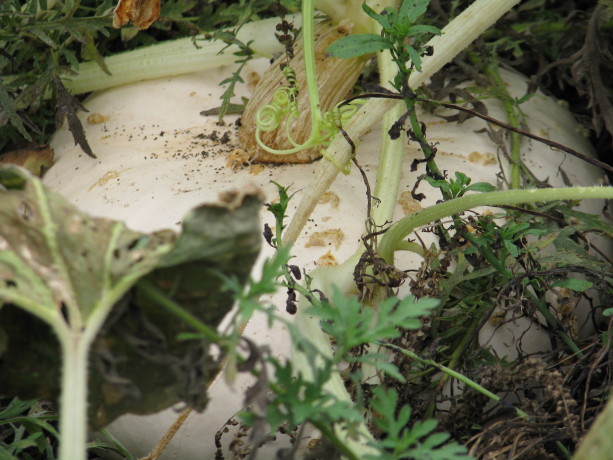
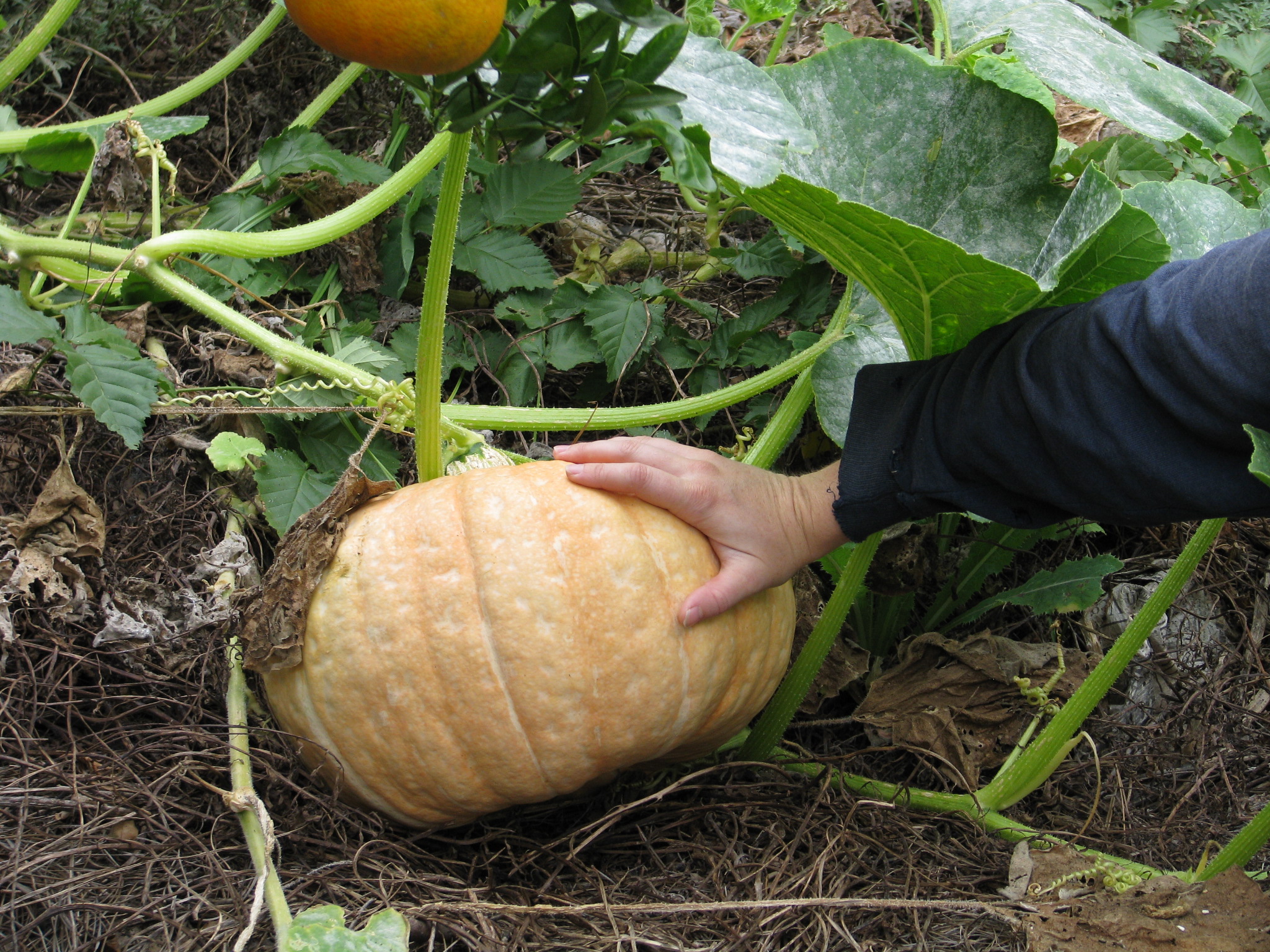
A surprise pumpkin hiding in the foliage. 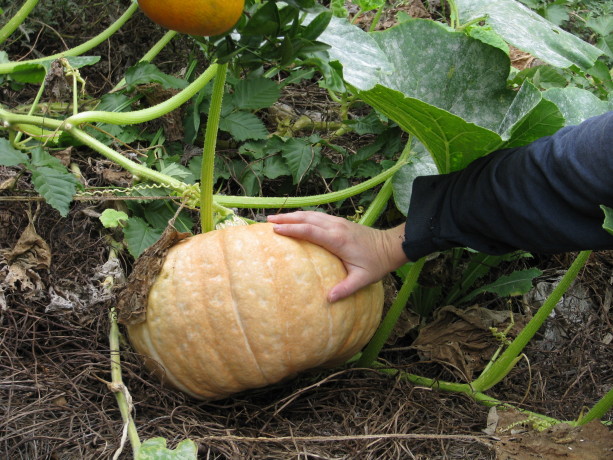
A huge and lovely gourd. 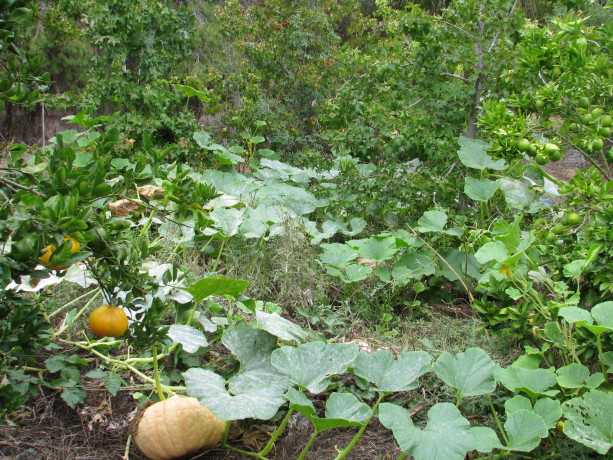
Vines taking advantage of vertical spaces by going up the trees. You can provide this, too, even in just a portion of your property. The permaculture Zone 5.
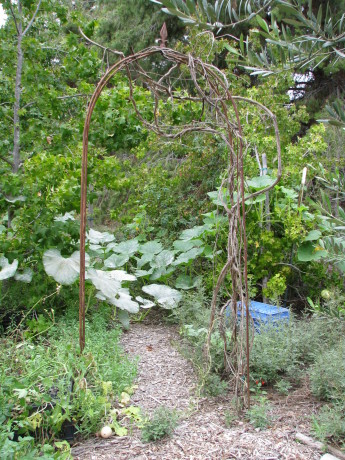
Why did the gourd cross the road? To climb up a liquidamber, apparently. 
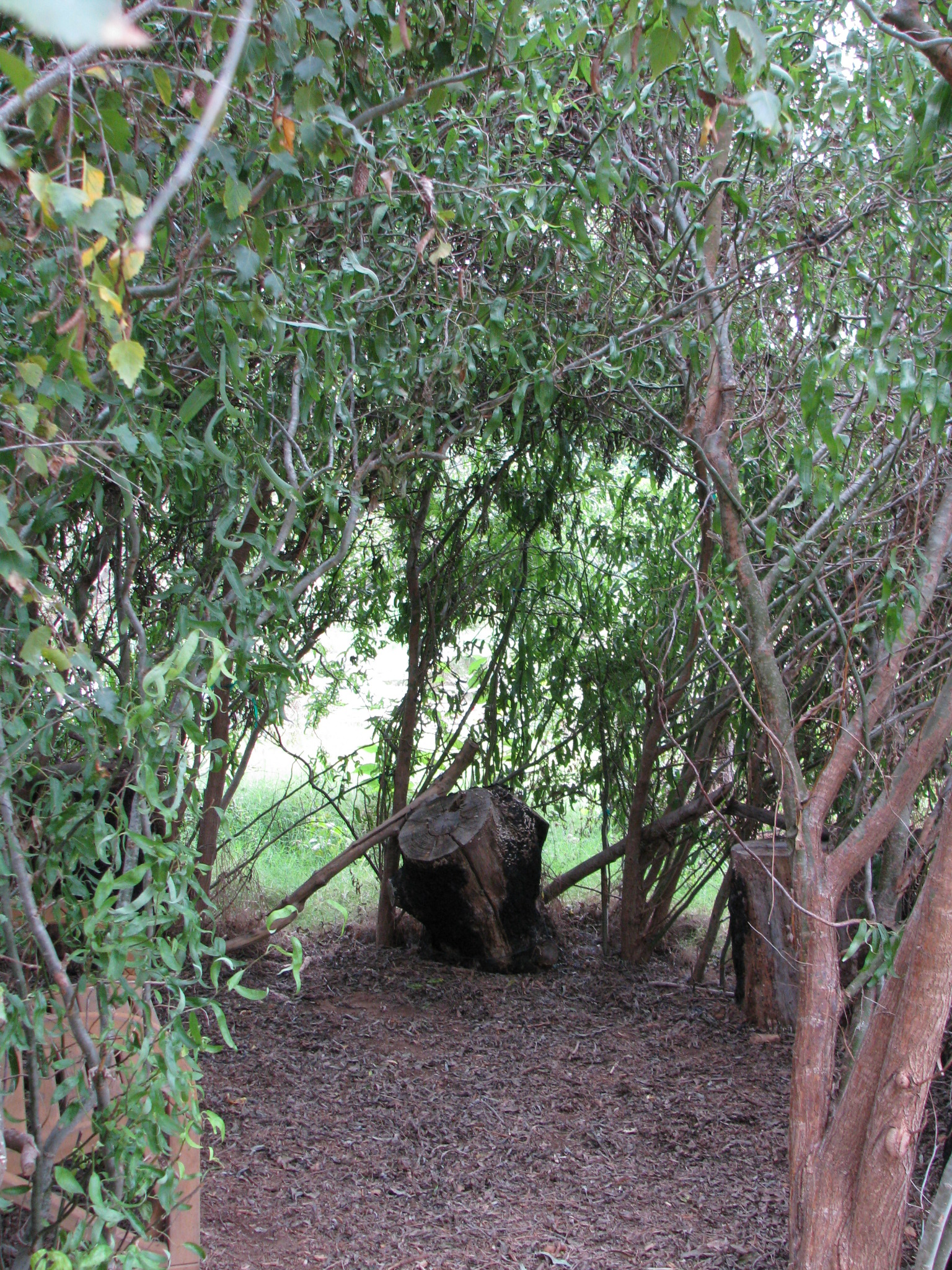
A glimpse of pond through the withy hide 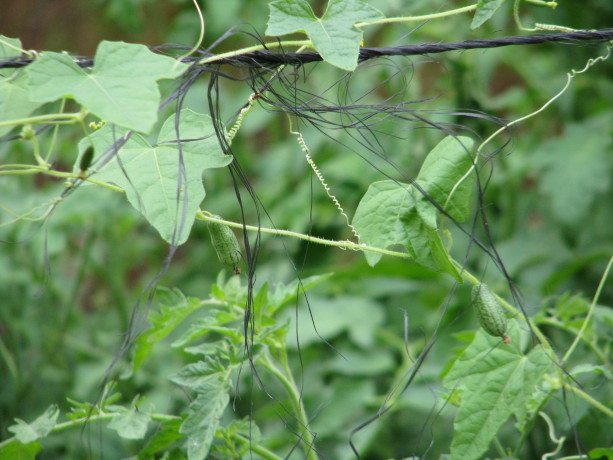
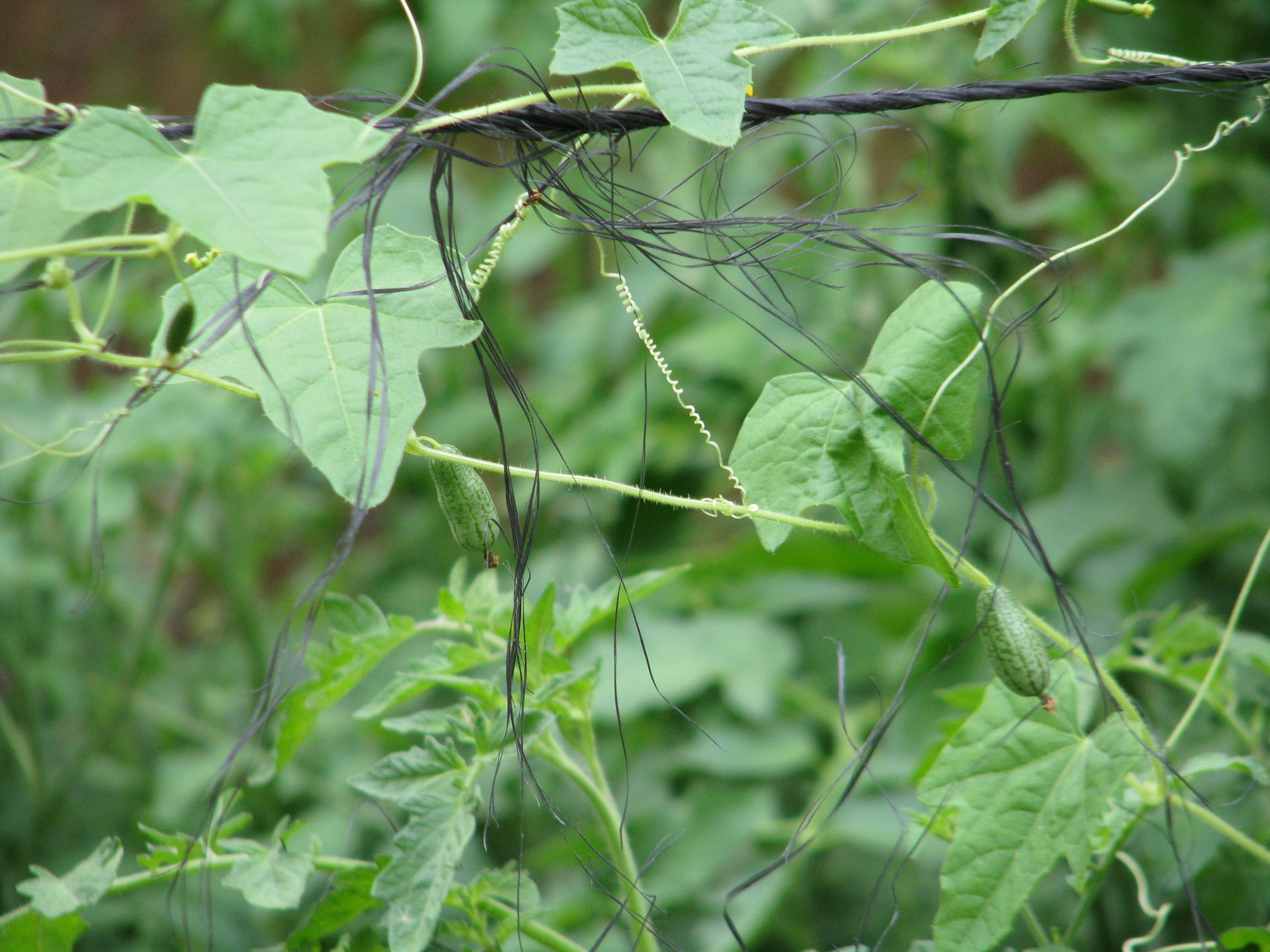
Mouse melons on a tiny vine. More cucumber than melon, they grow to be olive-sized. 
Time for me to get in the water and trim back the waterlilies before the water temperature drops! 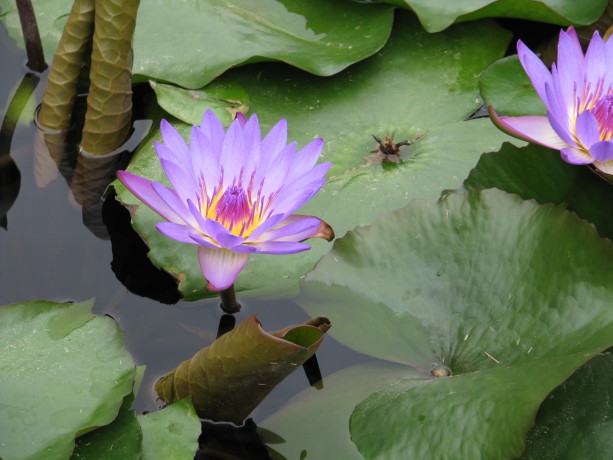
Purple water lilies in the pond. I’m indulging in showing you photos from that overcast October morning, and I hope that you enjoy them.

Eden rose never fails. 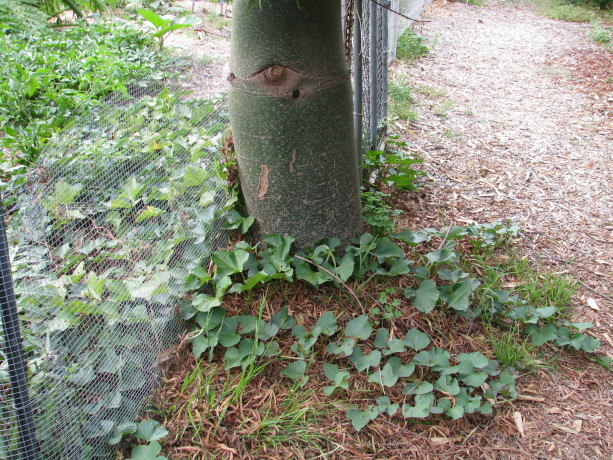
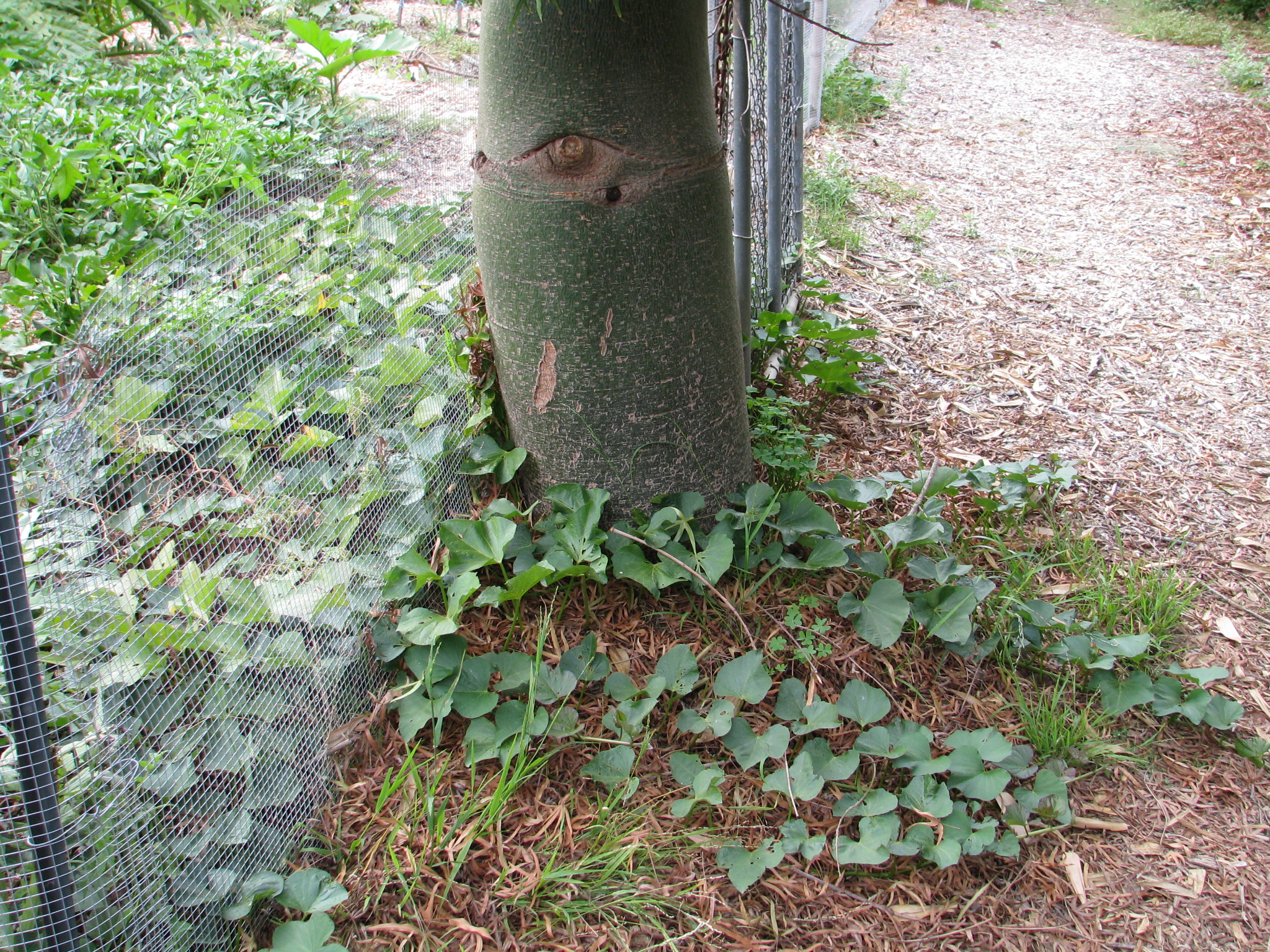
Sweet potato vines escaping the veggie garden; the leaves are edible. 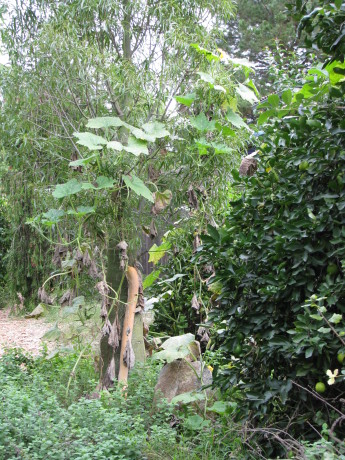
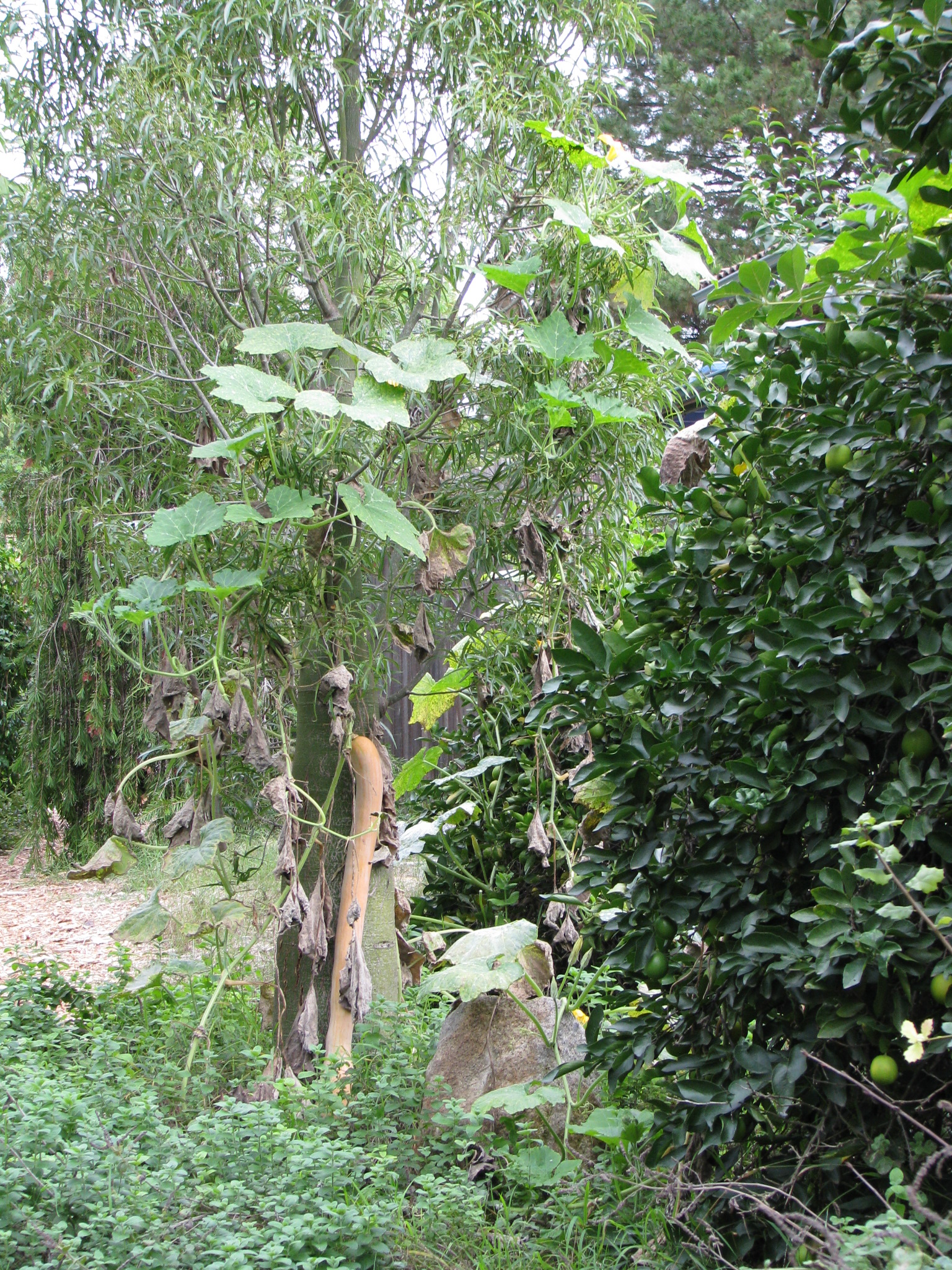
See the long tan thing on the trunk? That’s a zucchino rampicante, an Italian zucchini. Eat it green, or leave it to become a huge winter squash. 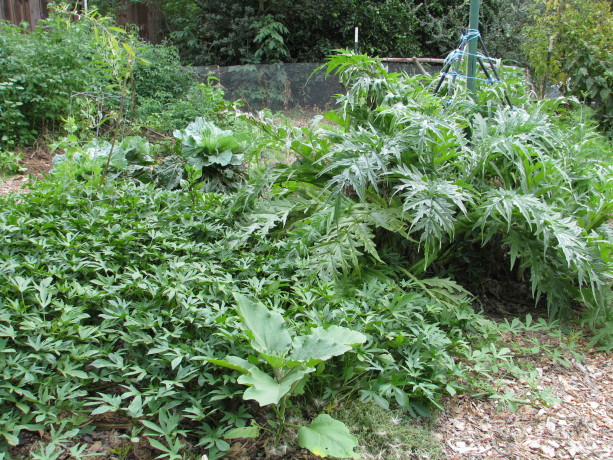
Violetta artichokes regrowing in our veggie garden, with a late eggplant coming up through sweet potato vines. You May Also Like
Native Insects and IPM
- Animals, Bees, Birding, Compost, Fungus and Mushrooms, Gardening adventures, Health, Hugelkultur, Microbes and Fungi, Natives, Other Insects, Permaculture and Edible Forest Gardening Adventures, Pets, Rain Catching, Seeds, Soil, Water, Water Saving, Worms
Lawn Care and Lawn Alternatives for Drylands
Drought restrictions have caused many people to turn the water off of their lawns; many have already taken that leap years ago. One of the main questions I field now is what to do with that nasty patch that once was a lawn. There are many low-water-use alternatives.
First, please don’t use artificial turf or gravel. Read about why by following the links to past blogposts.
You can have a lawn and not use as much water, and not add any chemicals to it, by understanding how grass grows. You can starting learning everything about lawn caring at ngturf.com/area-calculator/.
If you want and/or need a lawn space, make it as minimal as possible. If you are going to reseed, choose a California native seed that withstands the drought and our alkaline soil. Creeping red fescue is a good choice that grows tall and floppy unmowed, but is a walkable/playable lawn if mowed.
A grass plant spreads at its base, not its tip. Grass needs its blades to produce food. Common mowing techniques recommend mowing low, but that is doing your lawn harm and resulting in the need for aeration and chemical fertilizers. When you mow low, the stressed grass plant needs to push lots of energy into quickly growing more blades to feed its roots. Most weeds have a growing point at their tip and with a strong weed killer it can be stopped. Mow as high as your mower allows – 4 inches if possible. High mowing allows the grass plant to keep its blades for food making, and to put energy into deep root growth and into spreading. Mowing high cuts the tops off the weeds, and the height of the grass shades out weed seeds so they can’t germinate.
Water deeply, and less frequently. Catch an inch of water in a cup set under your lawn irrigation and shut the water off. Don’t water again until the grass shows that it needs it. Constant irrigation, especially on short grass where the soil is exposed, and rainwater on bare earth is as compacting as running a tractor over the ground. When the earth is compacted water just won’t penetrate. You pour water onto the grass which runs off or evaporates. Your grass can’t grow deep tap roots and is slowly starved to death.
Use a mulching mower and allow the grass clippings to return to the lawn. Stop using chemical fertilizers. Completely. In permaculture we feed the soil and not the plants. Healthy soil has billions of fungi, bacteria, nematodes, amoebas, and other creatures in every teaspoon. This zoo of soft-bodied creatures break down organic matter and make nutrients in the soil available for roots to feed from. The better the soil health, which means the more microbial activity and population, the loamier the soil and therefore the better water penetration as well. Instead of dumping high nitrogen fertilizer on your lawn, use compost, actively aerated compost tea , and chopped up leaves. (If you don’t have a mulcher attachment on your mower, or a blower with a reverse vacuum attachment, then put leaves in a trash can and use a string mower to chop them up- while wearing eye protection of course!). Chopped up leaves are all you need to fertilize anything. Best of all they don’t harm your pets or family, unlike chemical fertilizers.
If you don’t want a lawn, then figure out how you want to use the space. Do you want to just see the area from your windows? Do you want a meditation garden? Room for kids and pets to play? An outside BBQ spot? Decide how best to use this space. If you aren’t using every square inch of your property, you are paying property taxes for nothing.
To get rid of your lawn you don’t need to dig it up. Please save your money. Sheet mulch it. Sheet mulch is an inch of cardboard and/or newspaper topped with 4-6 inches of mulch. Gorilla hair (shredded redwood) or shredded ceder bark spread well and sit lightly on the soil, and you get more for your money. Sheet mulch will turn the grass into mulch and start activating the soil. Best of all, it looks instantly great, to satisfy your neighbors and family. If you have Bermuda or other very determined grass, you may need a thicker layer of cardboard. Sheet mulch now and allow it to sit over the winter and absorb the rains. In the spring you can cut through the cardboard and plant right in the ground.
If you want a low-effort garden, then please go native. We need to replace habitat that has been destroyed and give the animals and insects the food and shelter that they need to survive. Many California native gardens are not well done and look piecemeal and stark. This doesn’t have to be. Look around at the hills; unless you are well into the desert, there are plants of all types everywhere. If you have sheet mulched a green lawn, then allow the grass to die completely before planting natives; they don’t like higher nitrogen from freshly decomposing grass, or the residual from high nitrogen fertilizer. Sheet mulching over the winter and planting in the spring should be fine. If your lawn is already dead, then you can sheet mulch and plant immediately. Then allow the plants to fill out and you don’t need to mulch again.
See how the area looks from your windows. Make pathways that are wide enough to accommodate whomever is going to use it (2 feet wide for one person, 3 feet for two or a bicycle, 4 feet for a wheelchair). Don’t skimp on the pathway material. An ugly or uneven pathway will draw all your attention and no matter what you do around it, it will look bad. A good pathway well done and complementary to your house is important for your own satisfaction and for the resale value of your home as well. Choose destination spots and focal points. Benches, a bird bath, a specimen plant – these are all important. Then choose plants. I highly recommend the book California Native Landscapes by Greg Rubin and Lucy Warren. These are San Diegans so they know what works well in Southern California.
One inch of rain on one acre in one hour is 27,154 gallons of free, neutral pH rainwater. Most lawns are slightly convex so that water runs off of them. That is why there is a bald spot at the highest point where you just can’t keep anything alive. You want to catch all the rainwater -and irrigation water – you can. Catch it, sink it, spread it. Do this with simple earthworks that you can do with a shovel. Perpendicular to the water flow dig shallow swales (level-bottomed ditches). They only need to be an inch deep, or you can go much deeper. They can be filled with large mulch, and sheet-mulched over the top. Rain will then sink into the ground rather than rolling off. Sheet mulch – or any mulch – allows the rain to hit, bounce and then gently fall to earth. Catch every drop that you can, and the best place to catch rain is in your soil.
To further add water retention and nutrition for your microbes, bury wood. Old logs, old untreated building materials (nails and all), shrub cuttings, nasty spiky rose cuttings, palm fronds and trunks, they can all be buried and planted over in a process called hugelkultur. Even old cotton clothing, straw hats, or anything made with natural fibers can be layered with dirt and buried. Get the most from what you’ve already spent money on and let your trash fix your soil.
So, steps would be to decide what you want to do with your lawn area, design the pathways and special areas, determine what kind of plants you want to put there, dig in some earthworks, sheet mulch to kill the grass and weeds, then plant. Natives will need supplemental water (not drip irrigation, but a long soak and then allowed to go dry) until they are established. Then many of them don’t want any supplemental water; some go drought-deciduous, so do your research. A good selection that is lovely and will invite birds and butterflies into your yard might include Cleveland sage (not Mexican bush sage, which becomes very woody), apricot mallow, desert mallow, fairy duster, and ceanothus. Great retail native nurseries are Theodore Payne nursery in Los Angeles and Tree of Life nursery in San Juan Capistrano.
If you don’t want to go native, then consider low-water-use plants such as many Mediterranean herbs. Rosemary, oregano, marjoram, lavender and others interspersed with drought tolerant plants such as bird of paradise, New Zealand flax, rockrose, Pride of Madeira, and a host of interesting succulents in between. Aloe blooms are attractive to hummingbirds.
If you live in areas where there is a real winter, where you receive snowfall, your lawn care to prepare for the cold is quite different. The folks at Yardday have excellent tips to help prepare for snow, and you can read about them here. Keep in mind that the ‘fertilizer’ should be actively aerated compost tea and/or compost, NOT bagged NPK or other chemical or condensed lawn care fertilizer. These concentrated fertilizers kill microbes leaving your soil lifeless, water-repelling dirt.
There are lots of things to do with your lawn that are lovely, useful, interesting and beneficial to wildlife and to the earth. Care for your soil by not poisoning the microbes with chemicals, use your leaves, sheet mulch, and design for low water use. Its worth the effort.
You May Also Like
Native Insects and IPM